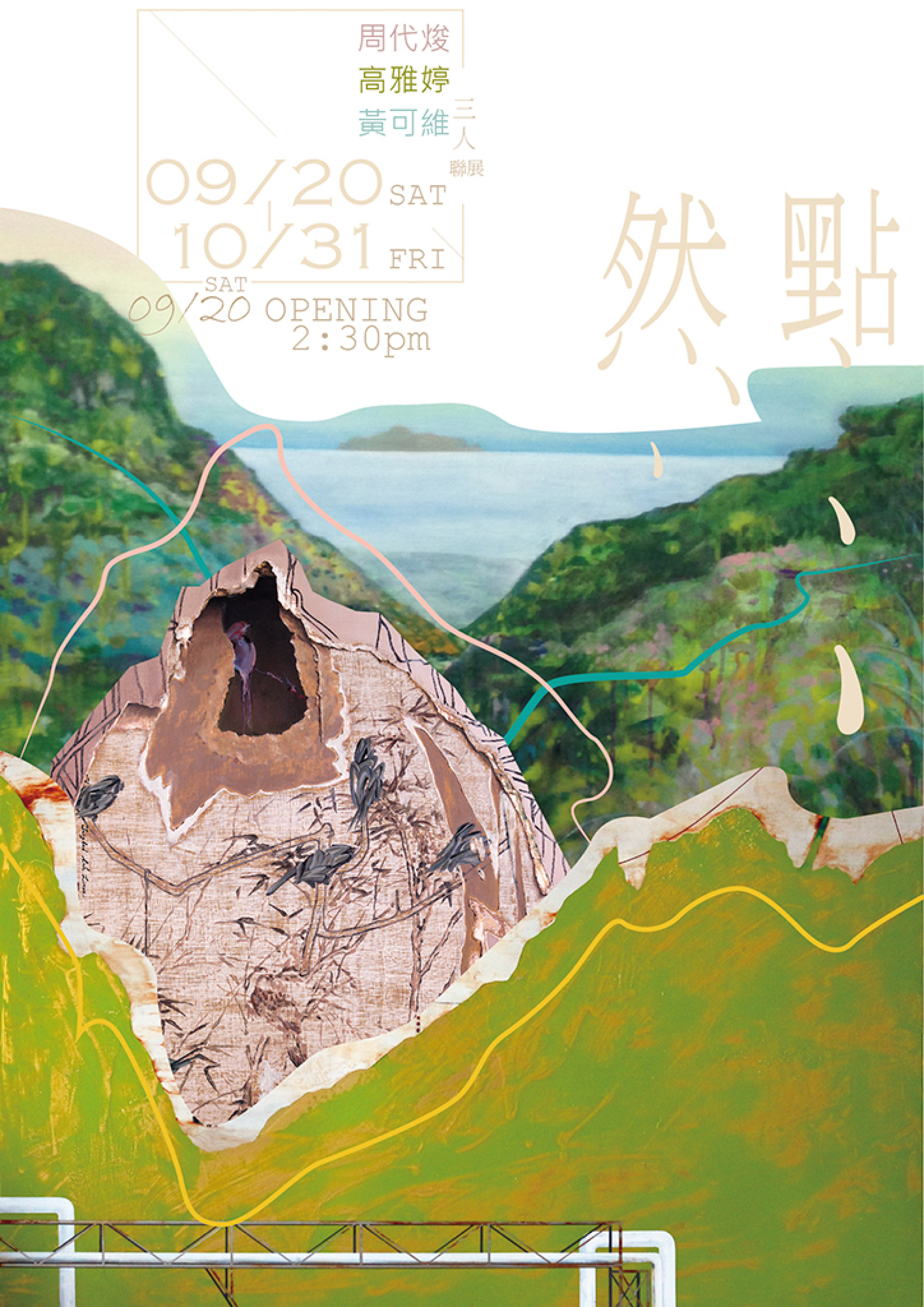
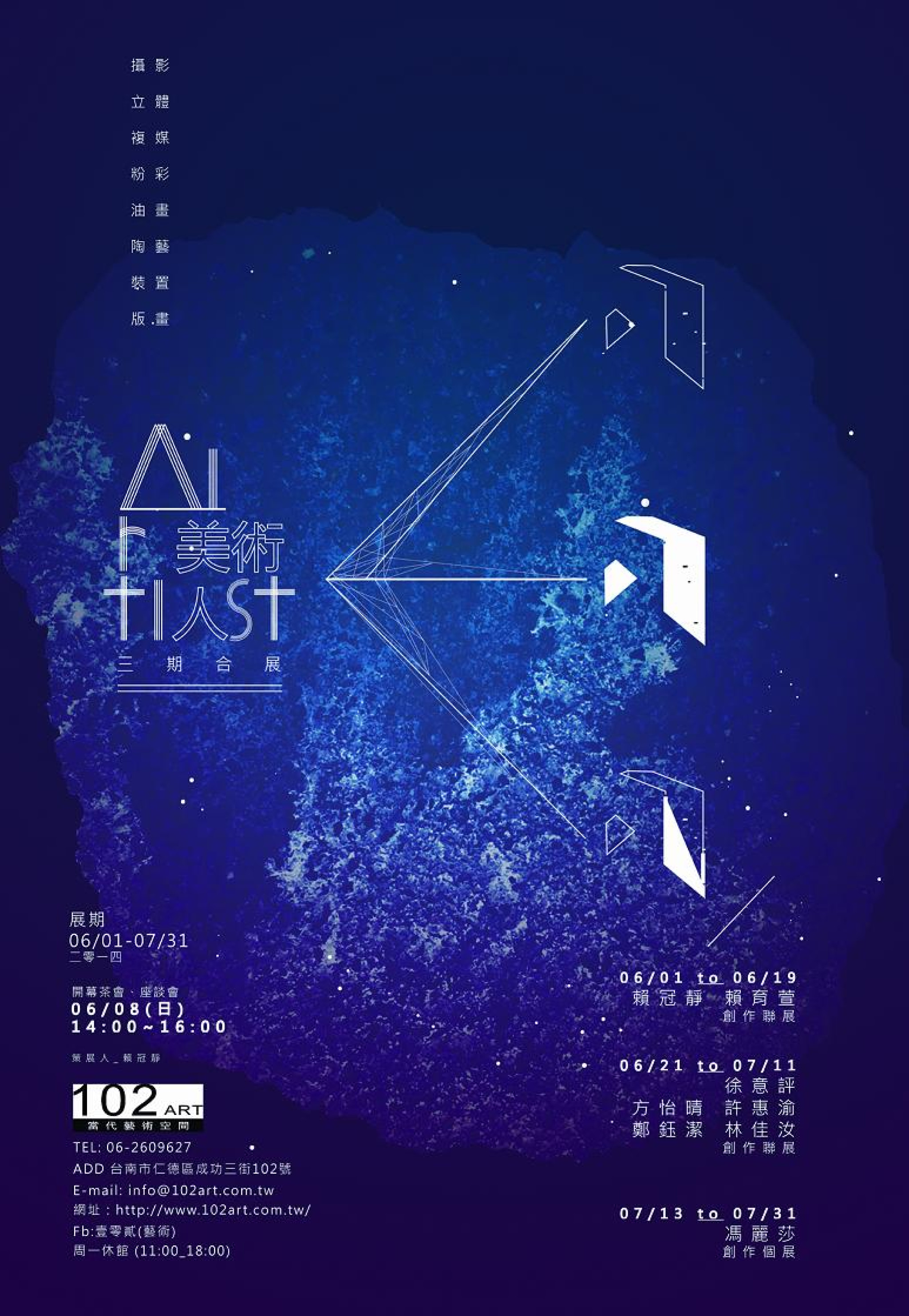
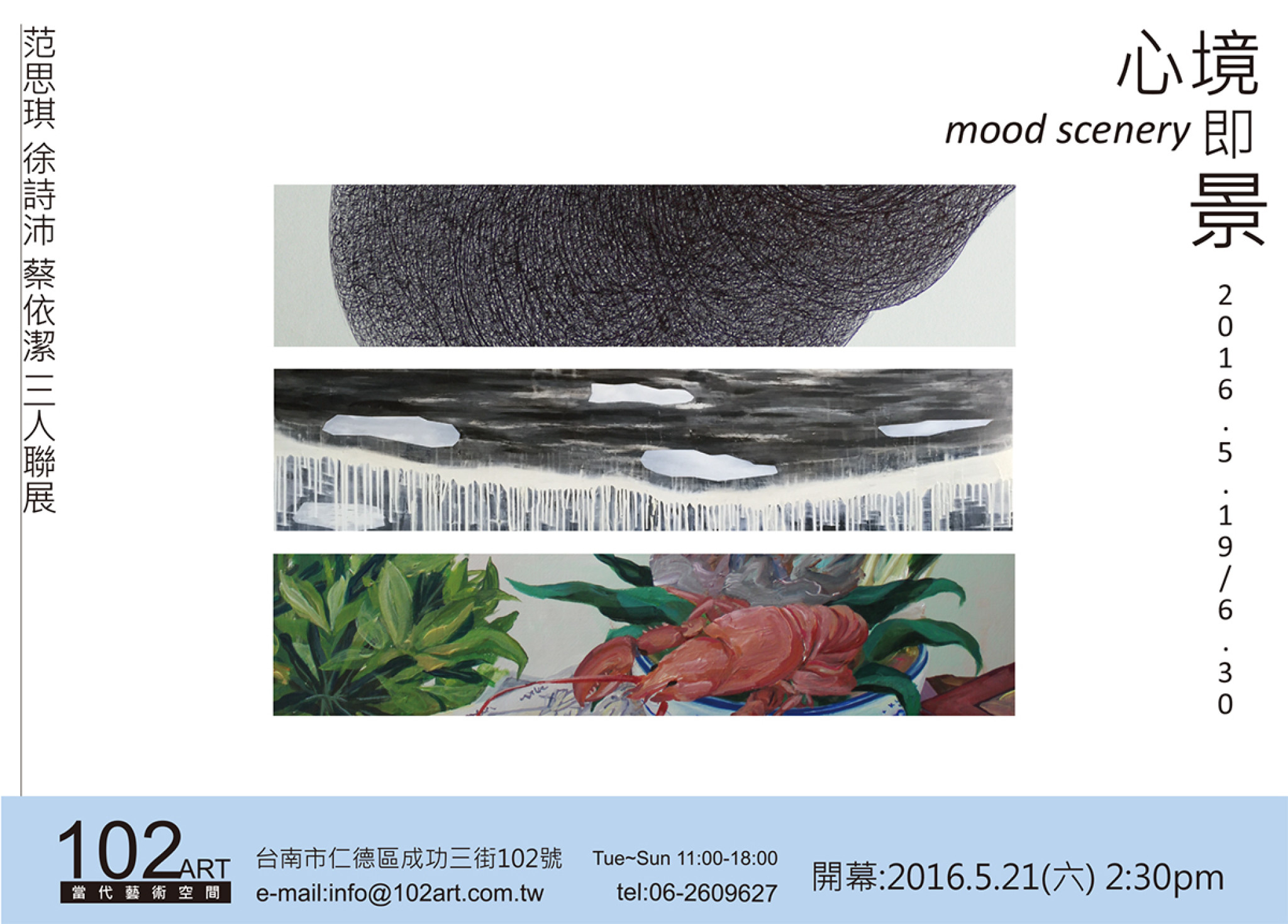
心境即景-范思琪、徐詩沛、蔡依潔三人聯展

It was the best of times, it was the worst of times,

it was the age of wisdom, it was the age of foolishness,

it was the epoch of belief, it was the epoch of incredulity,

it was the season of Light, it was the season of Darkness,

it was the spring of hope, it was the winter of despair,

we had everything before us, we had nothing before us,

we were all going direct to Heaven, we were all going direct the other way…


Aren’t we living in the same time as Charles Dickens describes in A Tale of Two Cities?


The circulation of information and substances is getting faster but our soul is becoming emptier than ever. Through the memory of time hidden in the scenery, the more internalized and deeper way is applied to explore the creator’s expression of scenery in mood/eye. “Mood Scenery” is therefore a theme generated on the premise of this inspiration.


For Fan, Sih-Ci, the artistic creation is a process that is mysterious as well as beyond description. The journey is carried out without burden. It is simple and clings to the original aspiration. In the journey, lines are the way she cognizes her own creation. Straight lines and curves come across it in silent and moving rhythm, using body to communicate with it. Because of it, the fast pace of the world slows down. She finds a new way to connect with the world.


Hsu, Shih-Pei interprets time and space through drawing and words. She expresses the profound and touching resonance through the hierarchy of life in heart. In a restless world like this, she listens and faces the silent voice in heart.


Tsai Yi-Chieh’s work is created based on city landscape. She is inspired by the way that people in urban cities are used to gazing upon scenery through diverse image frames. She uses saturated colors and plastics material to draw various modified and edited scenery pictures placed within our daily contemporary view.


Different life experiences and growing backgrounds make distinctive descriptions of mind. In the time like this, three artists interpret the world they see through creation, which also enables the viewers to take a glimpse of the life scenery in three artists’ heart.

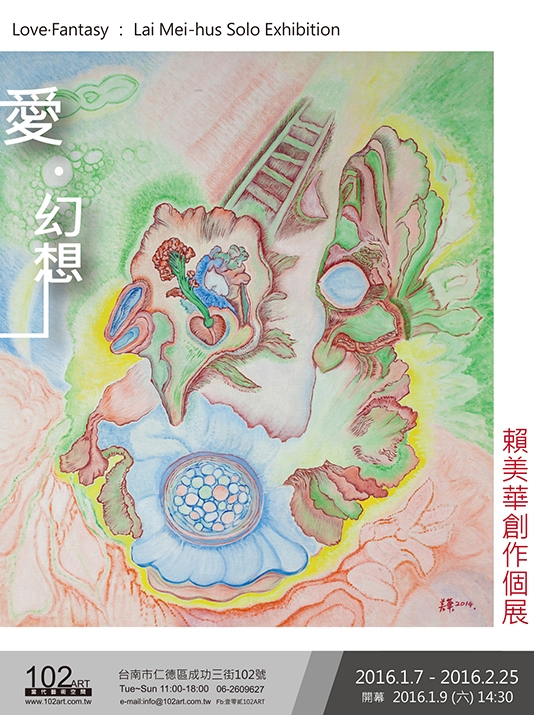
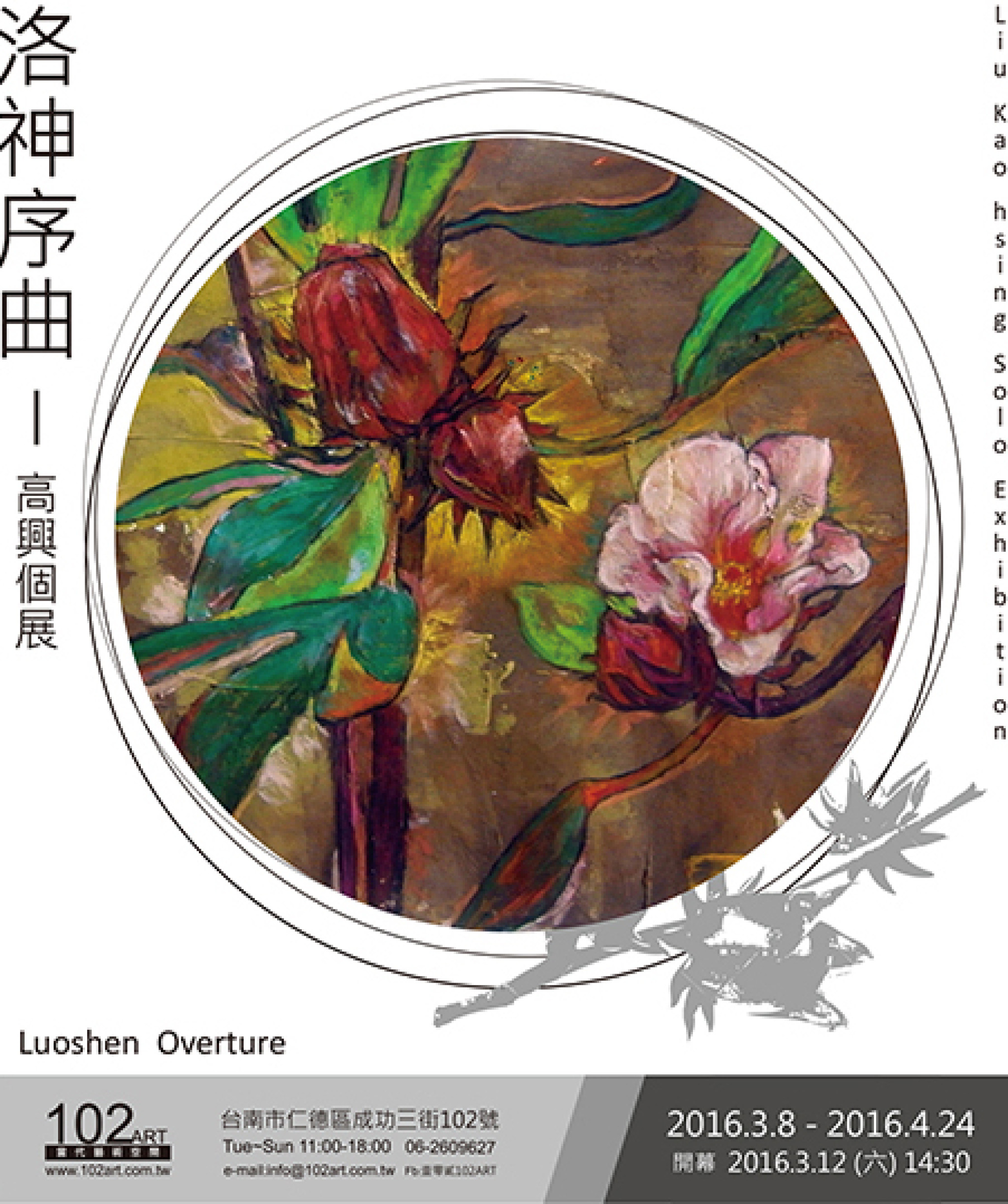
Love‧Fantasy –Lai Mei-hus Solo Exhibition

“I rarely use words to express my thoughts, painting is the tool to I use to express my ideas and thinking.” Lai Mai-Hua states the purpose of her artistic concept from the very beginning. Actually, there are many more ideas in her sensitive mind. She has long been used to recording her daily experiences through painting. Flowers, a passing cloud, a new moon, the ocean, music, literature and indeed any lovely things in the life can all inspire her to create. To become an artist capable of expressing beauty was her ambition from childhood, thus, flower, leaf, seed, eye … natural features appear throughout her work as creative elements, painted in delicate brushstrokes and gentle lines, and containing many shades of colour.

Lai´s works are full emotion and imagination, with influences from feminism and expression of the subconscious mind through surrealism; thus the composition of her paintings is bright, vivid, varied, and vibrantly-coloured. These come together to create a strongly individual character, which sets out Lai´s passion for life and leaves the viewer affected with a fierce tension. In her work, flowers, masks, human figures and animals are often interweaved closely, laid out in a way to suggest a sexual meaning.

“I don´t mind people thinking my painting symbolise sex” Lai said, “Sex is a big deal for human beings, sex is a kind of naturalness.” Art critic Lu Yung-Chi recognises Lai as significant in Taiwanese native feminism: “Lai´s feminism originates in her instinct of conscientious initiation, not as part of a trend or a movement of ideology. It looks like it is not very theoretical, but just because of that, the artist comes across as more righteous and bold.” Above all Lai´s work is full with emotion and feminine delicacy, which expresses her thoughts and feelings about being and existence; on some occasions it shows surpassing beauty, on others it unveils a fearful secrecy.  It touches a chord with the viewer.  

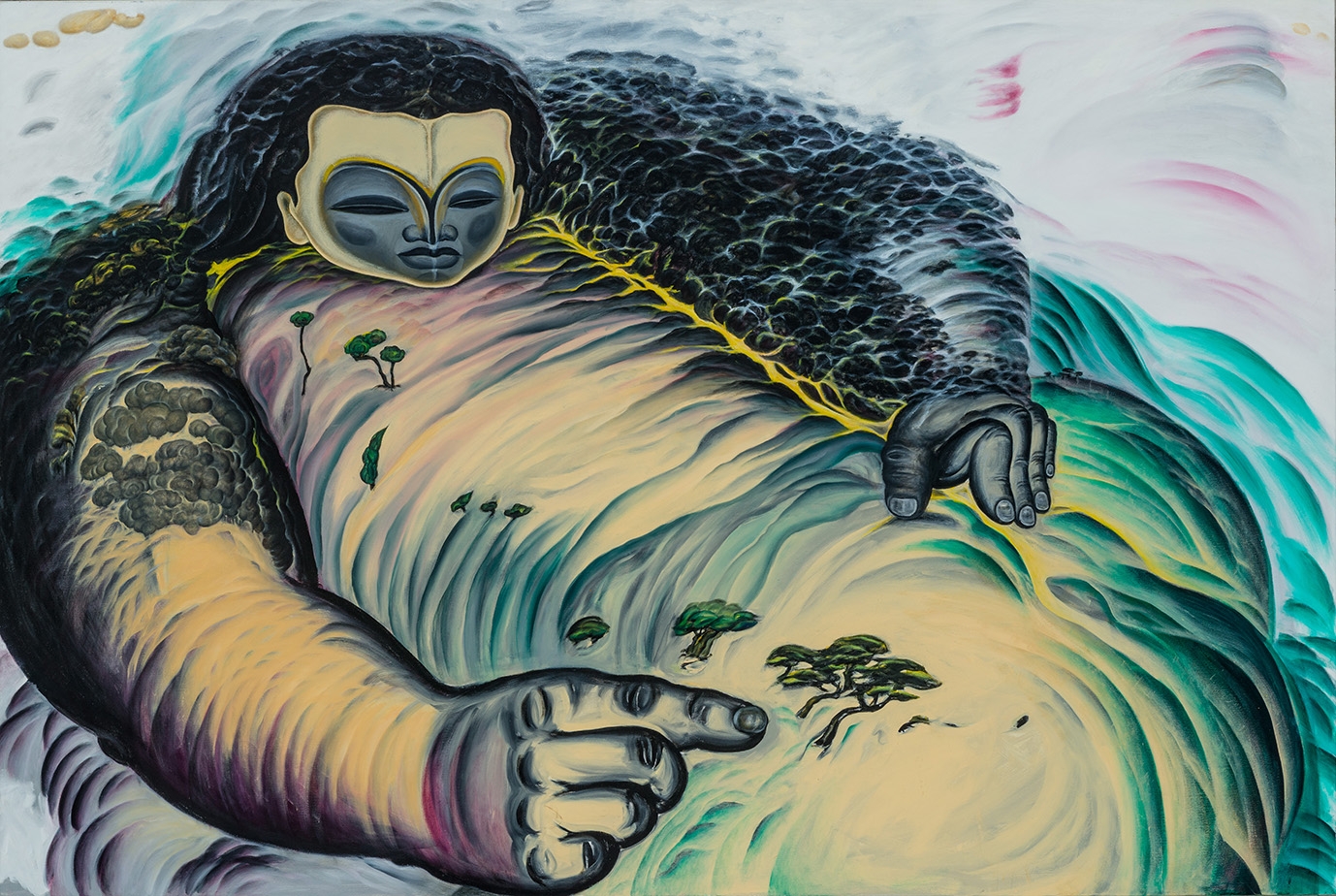
大塊‧圓神II-Solo exhibition by Zheng Jianchang

Solo exhibition by Zheng Jianchang

Words by Hsieh Chi-Chang

Open: May 8 2015 to June 27 2015

Location: 102 Art, Tainan


A notable feature in the history of the arts in Taiwan is that after the lifting of martial law, those artists who had experienced it entered a period where their focus was on critical examination of authority, their art part of a wider post-modernist movement. We see this among both Taiwanese locals and those who arrived after 1949. Directly or indirectly, they found ways to express suspicion and anger towards power.  Zheng Jianchang is one of these artists. He and a few art-loving friends founded ‘Taipei New Art Consortium’, and they used the urban backdrop as material, attempting to capture the connection between people and city.  

In 1983, in order to put down roots, and to gain some distance from the overwhelming influence at the time of western art, Zheng decided to return to his home county, Jiayi. After his experience of urban life in Taipei, he finally found meaning in the land and soil and history of his home patch. And it was there that he gradually established a mode of thinking for his future work, namely ‘Documenting Creation’. This allowed him to think deeply about Taiwan, reconsidering his past experience of Martial Law, an experience that came to help him treasure and value his birthplace.

Taking the role of observer is a necessary element of Zheng’s work. While acting as observer, he re-discovers himself. He self-reflects, seeking to explore meaning in life. He seeks to find joy in being alone in this place. At the same time he is conscious of a certain feedback in his work from daily activities, and from the objects that he observes, in which he finds his own reality.  

Over the years, ‘Documenting Creation’ shows Zheng’s growing ability in self-reflection. At the same time, he was experiencing a horror that people, culture and land were disappearing. In ‘Documenting Creation’ we see again and again his journey of the heart in recording the death and rebirth of parts of Taiwan, calling people to pay attention to processes of decay and to urge them participate in rescue and renewal. His works have similarities to Hayao Miyazaki’s manga creations, which are full of breath-taking and heart-touching scenes.  The visual language of his work is so rich and imaginative; yet at the same time there is evidence of deep thought, a demonstration of his thinking on reality and problems in society.

Zheng has devoted his life to this land and its human landscape. His paintings record his silent and faithful observations of the environments, land, people and culture. He also contributes his thoughts on important issues facing society. His concerns for Taiwan’s land and people will become more and more apparent as time passes. We are looking forward to seeing Zheng’s ‘Documenting Creation’. 

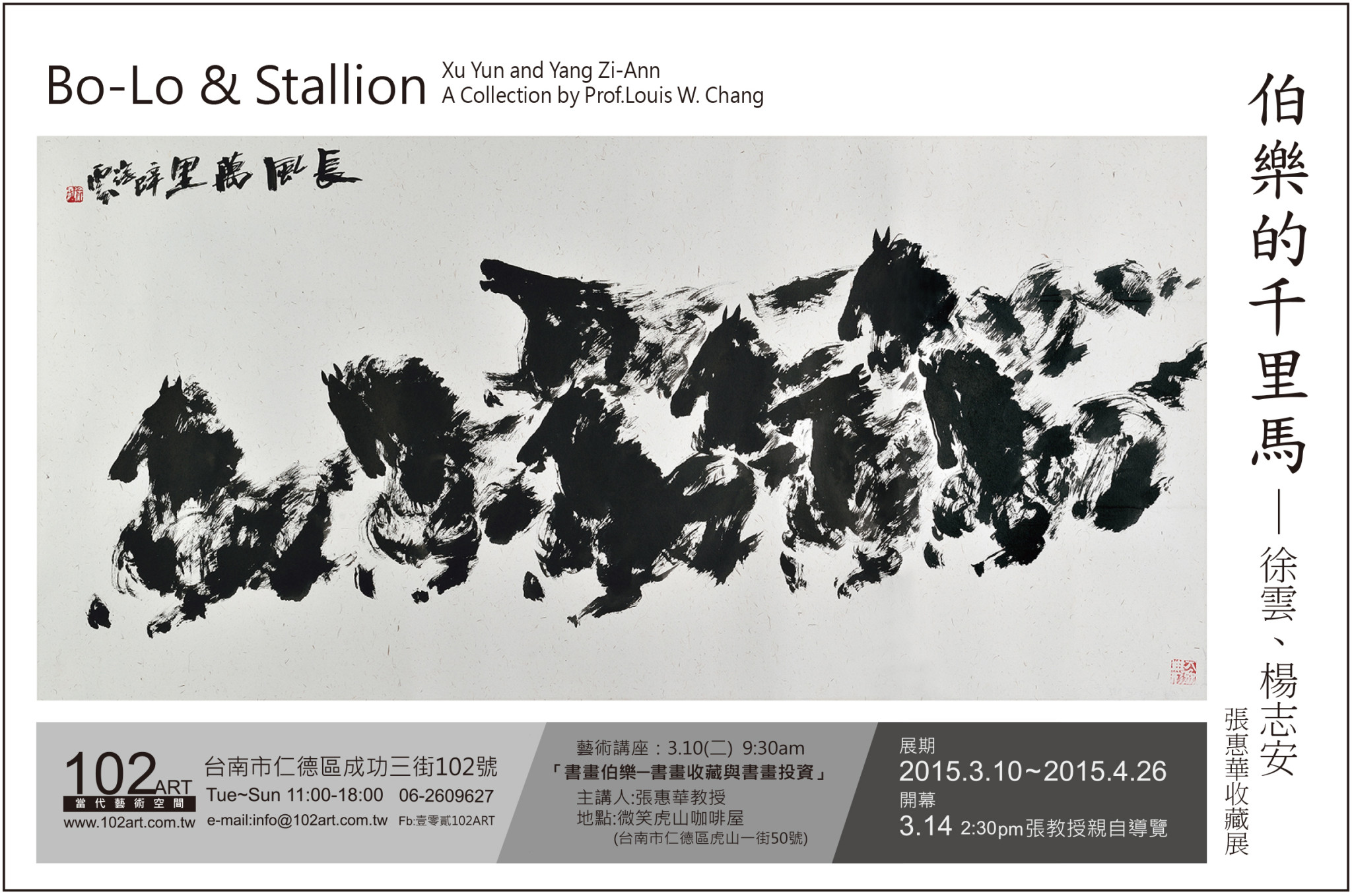
伯樂的千里馬─徐雲、楊志安/張惠華收藏展

Bo-Lo & Stallion  -  Xu Yun and Yang Zi-Ann /A Collection by Prof.Louis W. Chang


Bo-Lo, in Chinese legend, was a person who could recognize a stallion (horse with great potentials) although that horse was still unnoticed by most common people. Such ability in "foreseeing" long-ranged potentials of an artist's art is the essence in art collection. Indeed, a successful art collection depends more on one's "foresights" than just on one's "financial capability". Prof. Louis W. Chang is a renowned art collector, especially on paintings. He has built an admirable collection of paintings by using his "foresights" on art before many paintings have risen to unreachable values. 102 Gallery is fortunate to get Prof. Chang to share some of his foresights with art lovers in Taiwan. In this Special Exhibition, Prof. Chang will introduce works by two artists, Xu Yun and Yang Zi-Ann, whom he felt to be "hidden stallions" in the world of art.

Both Xu Yun and Yang Zi-Ann are still relatively "young" (under 60 year's old) artists in China. Xu is especially famous for his horse paintings. His horses were painted with splashed ink technique providing the horses with life, spirit, and power. He also liked to paint with sensuality of Tang dynasty: ladies, horses..........  portraying both elegance and grace.

Yang Zi-Ann is the Associate Director of the Zhiangsu Ju-Yung Art Institute in Nanjing. Yang painted his "Chinese" landscape paintings with "western" concepts via unique and self-created techniques. From a distance, one sees "Chinese landscape" paintings with "traditional" floating lines and vibrant colors. However, at close, one sees "contemporary" motifs and delicate textures. Viewers many times would utter: "Ohhh, look at this !" or " Wow,  how did he do that ?!".........

Regardless of the "boldness" of Xu Yun or the "delicacy" of Yang Zi-Ann, one will be totally "swallowed" by the arts of these two artists. Come to Prof. Chang's lecture sponsored by 102 Gallery at smile hoo coffee at 9:30AM ,Mar.10,2015 , as well as to the 102 Gallery exhibition between Mar.10 – Apr.26 and experience this wonder. It promises to be an pleasing experience, in either viewing or in purchase, that you will never forget.

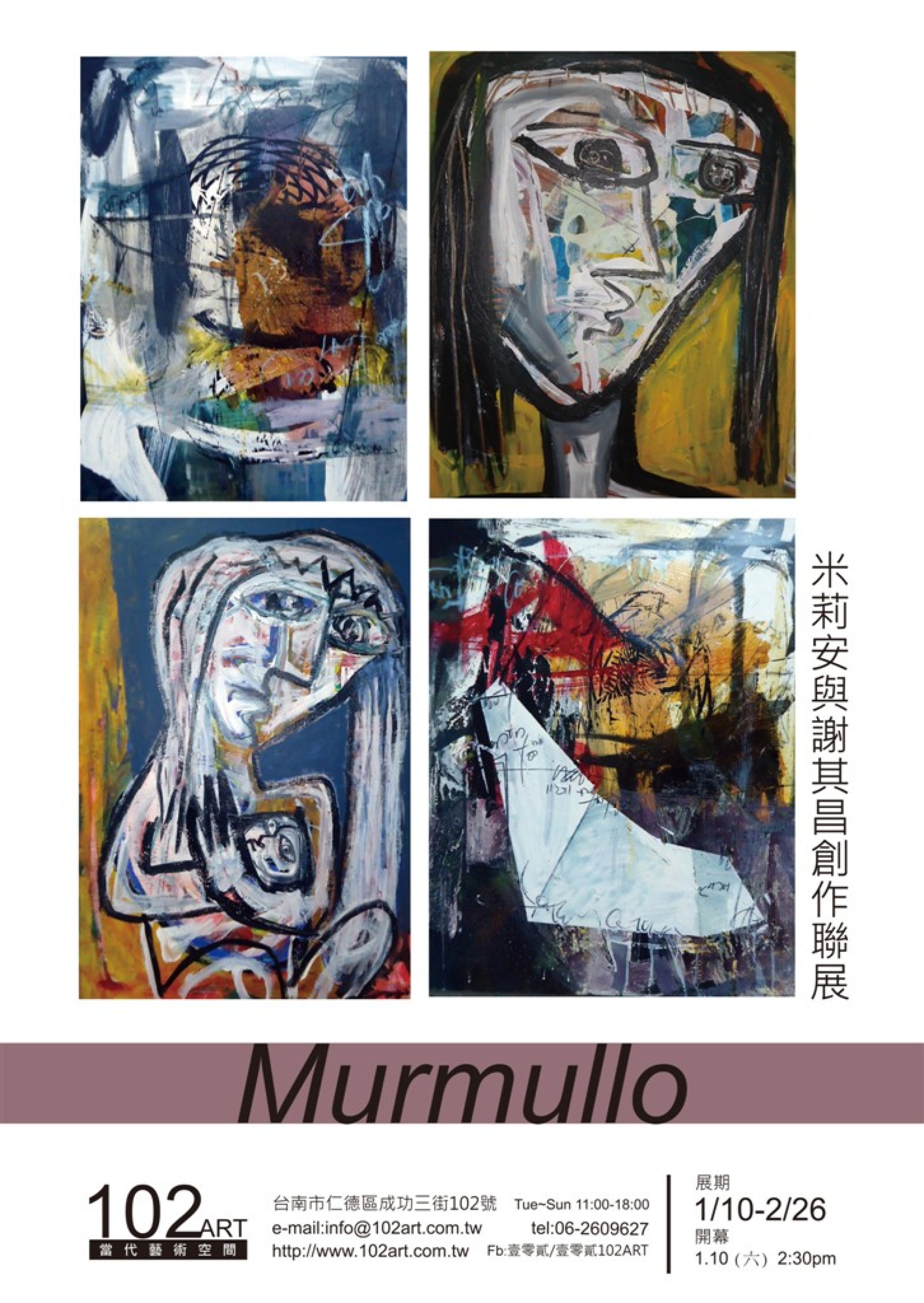
Murmullo-米莉安與謝其昌創作聯展

Murmullo – Myriam and Hsieh Chi-Chang Joint Exhibition


This exhibition, entitled ‘Murmullo – Myriam and Hsieh Chi-Chang Joint Exhibition’ presents the art of Spanish artist Myriam Catala Soler and her husband Hsieh Chi-Chang, who studied in Spain for some years. The exhibition is scheduled to run from 10th January to 26th February at 102 Art in Tainan. There will be an opening tea reception at 2.30pm on Saturday, 10th January, and all are welcome.


In this exhibition, Myriam will display her works which much exhibit a particularly Spanish style of artistic expression; at the same time, Hsieh Chi-Chang will demonstrate his own style, which was transformed after studying in Spain. Together, their works demonstrate a perfect combination of East and West. The works also illustrate use of different forms and techniques in search for their own inner worlds and imaginary totems.


Myriam coincidently discovered that for her, clay is like a wonderful magic which allows her to go deep inside and create forms from her dreams in three dimension expression. Although her manuscripts and sketches are created without constraints, they also serve as mental maps, bringing out the variety of her three dimension works. The works in this exhibition illustrate her practice of inward-looking contemplation of the external world. She is in search for human relationships in order to understand the internal connections between herself and others. Myriam’s works all start from her imagination, and come from the bottom of her heart. Through her hands and eyes, her work communicates interaction and transformation between external and internal worlds.


Hsieh Chi-Chang’s works tells of his experience of transformation after spending years abroad. Based on the graffiti he drew and the simple notes he produced on his travels, he confronted and uncovered hidden impressions in his mind, and went on to enquire into the connections between abstract shapes and mind through repeatedly transforming, co-presenting and overlaying materials in his art. Some works in this series were put away for a while and picked up for completion from several months to a year later. In the process, some of them were completed, then destroyed, and re-built. In the end, memory and sub-consciousness become the origin and source for the artist’s creation.


Through both Myriam’s and Hsieh’s work, an artistic philosophy is demonstrated: coherence and interaction between ‘object and self’, ‘internal and external world’, and finally ‘spirit and material’.

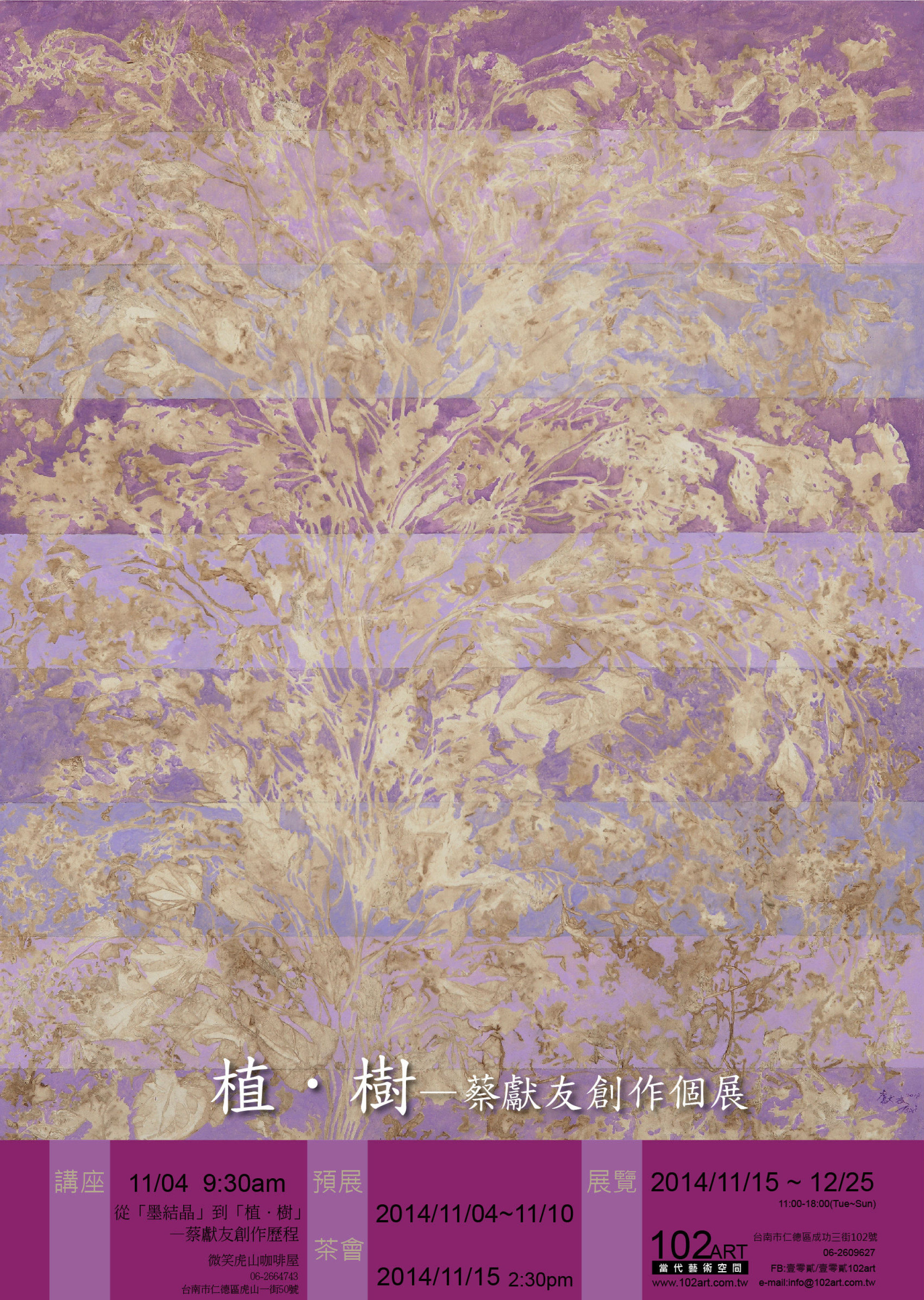
植・樹 - 蔡獻友創作個展

‘Trees, Planting’ – Tsai Hsian-Yiu solo exhibition

Exhibition period: November 20 to December 25 2014

Location: 102 Art, Tainan.


‘Trees, Planting’ – in my visual work, I grow trees from falling leaves.


Goethe said: ‘I must tell you discretely that I am already very close to the secret of the creation of plants, and this is undoubtedly the most simple thing in the world. The archetypal plant as I see, it will be the most wonderful creation in the whole world, and nature herself will envy me for it. With this model and the key to it, one will be able to invent plants [...] which, even if they do not actually exist, nevertheless might exist and which are not merely picturesque or poetic visions and illusions, but have inner truth and logic.

In the science fiction film Avatar, there is a ‘home tree’ which is the source of all life on the planet. The ‘home tree’ contains the essence of the world. The plot of the film is not literally true of course; it is a work of imagination, but a kind of imagination rooted in natural philosophy.

Goethe shared with us his secret of plants, which appears to embrace the internal laws of nature. Goethe’s relationship with plants is not merely that of a relationship between a human being and his external world, but comes direct from his conscious awareness of the essence of plants, which for him is an unchangeable norm; in turn this unchangeable norm can be experienced and grasped through personal intuition. Goethe thought the external form of plants were only a surface matter of appearance, and that we must look deeper into their essence to encounter their nature. He also speculated that all plants might have evolved from a single source.

Goethe’s intuition drew him to conclude that the various parts of plants that we see are essentially constructed through metamorphosis of the plant’s essential organ, the leaf, so he constructed the notion of plant archetypes. These plant archetypes represent an extremely powerful energy, the basis of the plant’s many changes. So ‘one leaf is one tree! One tree is one leaf.’ All plants are seen by Goethe as representations of an essential plant archetype, which itself allows nature to create all sorts of clever shapes that can go on to carry meaning.

Though the inspiration of trees and leaves, I started to ‘plant (meaning paint) through leaves’, and so comes this exhibition, ‘Trees, Planting’. For me, in this series, leaves provide an insight into the lives of plants, and into metamorphosis in nature. They give me all kinds of real feelings. I ‘planted’ the falling leaves on the canvas and made them ‘return’ in form to become trees once again. Through this exercise, falling leaves were no a source of sorrow, but instead were at the heart of a positive narrative. The ‘Trees, Planting’ series is about soul and idea. Falling leaves ‘planted’ trees on each canvas, almost as if a sapling was planted in my mind and body. The image of tree on the canvas is a projection of a tree from the mind.

‘Trees, Planting’ is a reflection of a previous series, ‘Falling Leaves’. The image I tried to create in ‘Falling Leaves’ was of power that came from the deep silent rhythm of nature. Both series can be traced to an even earlier series, which is entitled ‘Leaves Fall on White’. This series allowed me to get close to nature and reflect on my life, the moment at which I restarted the power of my mind. It was a journey from external materials (shape – form – physical form) to mind (leaf – tree – body – sense – situation – presentation – revelation – transcendence).
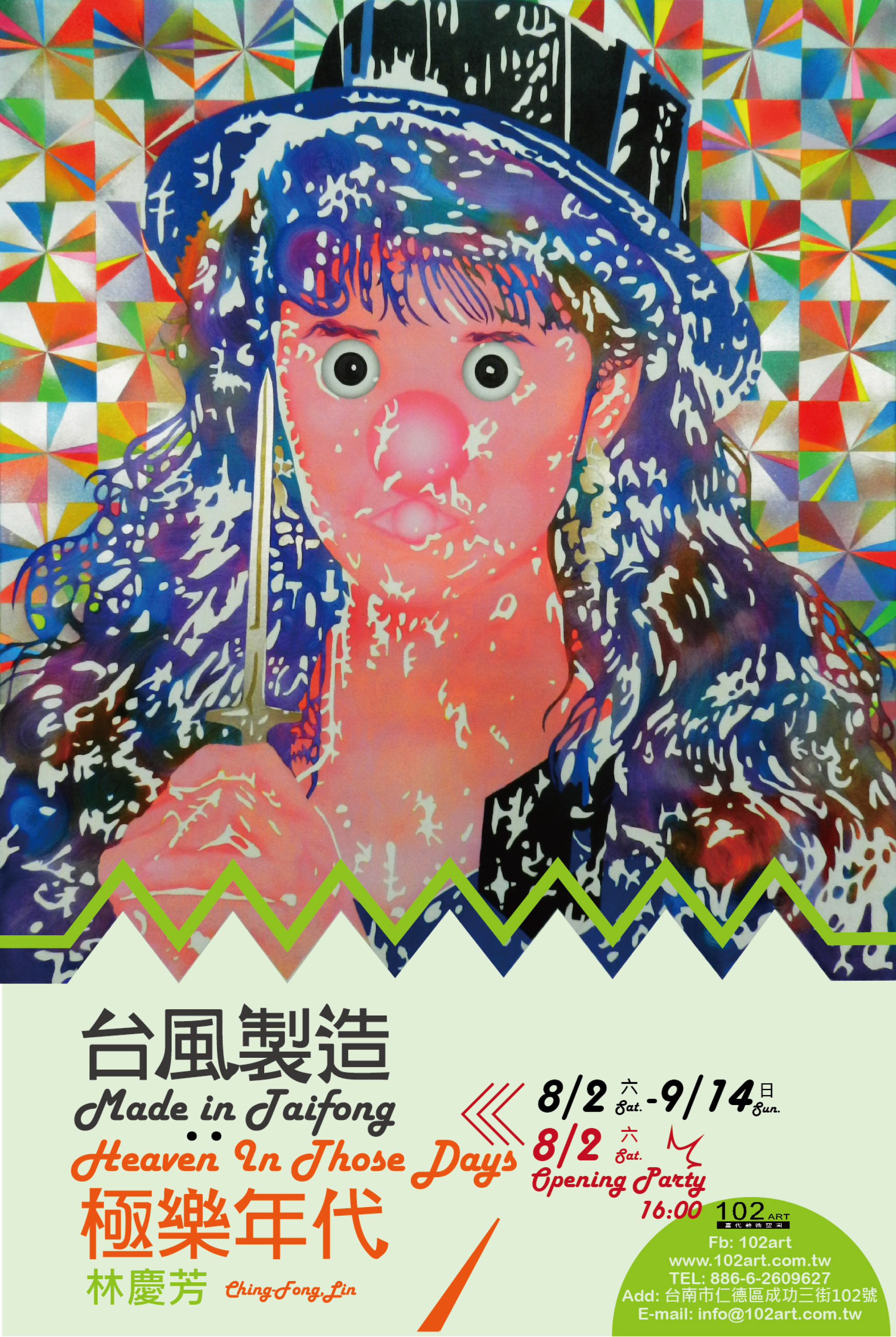
台風製造:極樂年代-林慶芳個展

Lin Ching-Fang, a Taiwanese artist of their own, after observing the work of Lin, it is not hard to discover he has got a unique style of his own. The strong “Taiwanese style” flavor appears in his work is pure and authentic. It even delivers a sense of simplicity and relieves; a graceful portrayal of genuine and friendly “Taiwanese style” culture.

The exhibition: Made in Taifong: Heaven In Those Days, Lin has recreated the era of Made In Taiwan, in retrospect the wonderful childhood back in the days, a collection of The Aquarium series, Fishing Machine of Love, Damp Angel and The Mudguard, Lin is good at expressing local life style abstractly, a mixture of alternative material and a diverse set of colors deliver the good times once in the past, magnify the wild good times we all once want to chase after recklessly, once stepped into the exhibition hall, it allows us to detach ourselves from the expectation of the society and the material narcissism of the present, reflecting the wonderful era into the present decayed chaos, shall all be returned to the glorious heaven in one’s heart.

In the exhibition we can find a gradual change in each phase of adoration during the process of growing up, from the fishing machine in childhood to the teenager worshiping superstars, filled with innocence and also a pause of eternity, rooted deep in our genes growing up, Lin transformed the memory we shared growing up with ease, what is most impressive is that he always have a way to capture the color and figure of the past, creating a resonance with us, such as the Damp Angel series, he captured the beautiful star which is most representative during the era, treat them as angels, refining the figure of this land, one by one presenting the local figure being re-identified, at the same time chase after the good old times of Taiwan with sympathizing heart, so we shall be stronger to face the present moment. In Taiwan mudguard series, we find in Lin’s work with less processing of the scattered pieces, replaced by more of the matte skin in larger area, which implicate the deletion of the sludge.

Lin has been examining the detail of the essential joy between each one of us relentlessly, the joy from the era that is not immersed into the secular world; the culture, environment and profound local character and life made of that era, is the source of element of his work, he is still active to deliver his work in Taiwanese Style, expressing the local figure, a view without gap that swept to every corner.

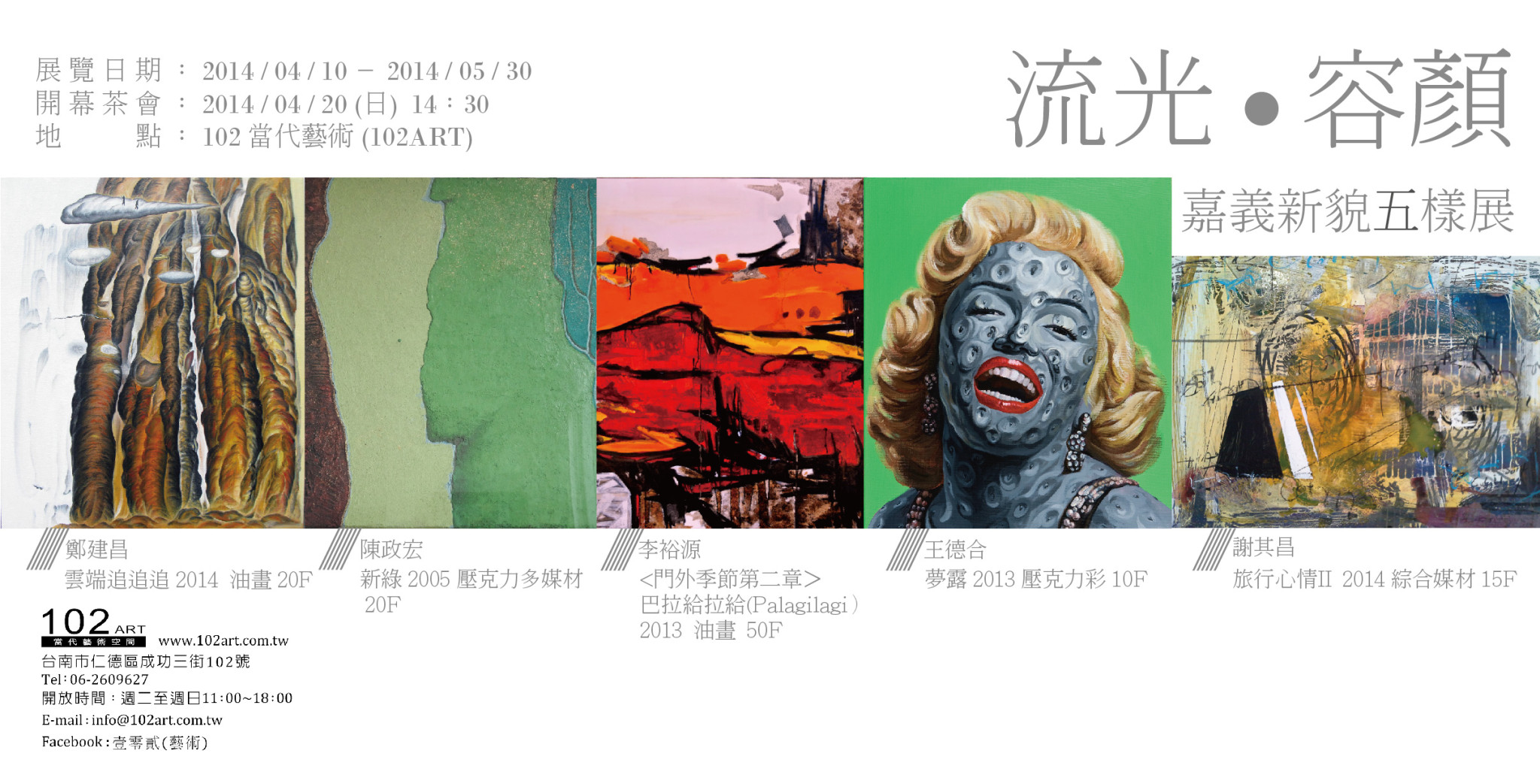
流光·容顏-嘉義新貌五樣展

流光‧容顏-嘉義新貌五樣

                                        文:王德合

「流光‧容顏-嘉義新貌五樣」聯展集結了嘉義鐵道藝術村五位駐村藝術家,包含陳政宏、鄭建昌、李裕源、王德合、謝其昌,展現嘉義畫都精彩多元的當代藝術創作風貌。本次展覽以「流光‧容顏」為題,探討藝術家對土地、記憶與人文生活的精神思索。

陳政宏作品「驚豔系列」,是藝術家旅遊希臘、北非、摩洛哥、日本等地的印象所得,他感動於異國大面色彩所散發出的迷惑魅力,透過創作表現轉換成此一系列創作。作品中的色彩,來自對自然景象以及繁華繽紛的驚艷印象,在內心反射思惟而成;婉約柔和的曲線,切割出隱約可辨識或不可得知的形體。自由的曲線與色面,讓「驚豔系列」作品自然流轉於磅礡、奔騰,呢喃、低語的浪漫氣息中。

鄭建昌早期經歷了臺北都會文明的洗禮,強烈的疏離感讓他毅然回到自己的故鄉-嘉義。落地生根的沉澱思索,才真正發現土地的存在、歷史的定義以及人的價值,也因此展開他和土地對話的系列創作。鄭建昌的作品常常融入民間傳說和隱喻,也富萬物有靈、生死輪迴的神秘傾向。其畫作常以單純的造型與色彩、巨大與渺小的對比,以獨特又溫暖的樸拙風格,傳達對臺灣土地、人文、自然環境的關懷。

    李裕源曾因機緣在台灣的山林部落間穿梭兩年,深刻感受到部落住民對土地的情感,他透過隨興速寫紀錄這風土人情,921地震卻讓許多他曾經造訪的部落及朋友瞬間隕落。2001~2004年他重新反芻生命記憶,創作了「門外季節第一章」,試著禳自己面對創傷的土地及人群。2013年再創作了「門外季節第二章」,將以前在山林部落間的手稿轉成作品,重新回味台灣山林曾經的美,也藉此感念那些在災難中逝去的流光與容顏。

王德合以不同性格、年齡者化身為草莓族來進行繪畫創作,藉以反思我們對世代認同的偏頗概念。對於草莓族的刻板印象:光鮮亮麗、甜中帶酸,在溫室中長大、抗壓性低,重視物質與享樂,個人優先於群體權益的年輕世代。我們總喜歡以偏概全、貼標籤式地進行價值判斷。當瑪麗蓮夢露、電影英雄角色、藝術家本人都幻化成了紅豔的草莓,讓我們不得不重新思索:或許你我才是真正的「草莓世代」!

謝其昌的「旅行‧進行式」系列創作,是多年身處國外環境經驗的轉化。他將國外旅行期間的簡單書寫與塗鴉作為基底,與自己的潛藏印象相互結合,更以並置、轉化與重複的表現技法,反覆在作品中堆疊與覆蓋的過程,來探討抽象形体與內在心靈之間的關聯。謝其昌的自由書寫及塗鴨行為,藉由藝術創作的過程轉化為抽象造形的藝術能量,建構了現實及對現實書寫的心靈式記憶。