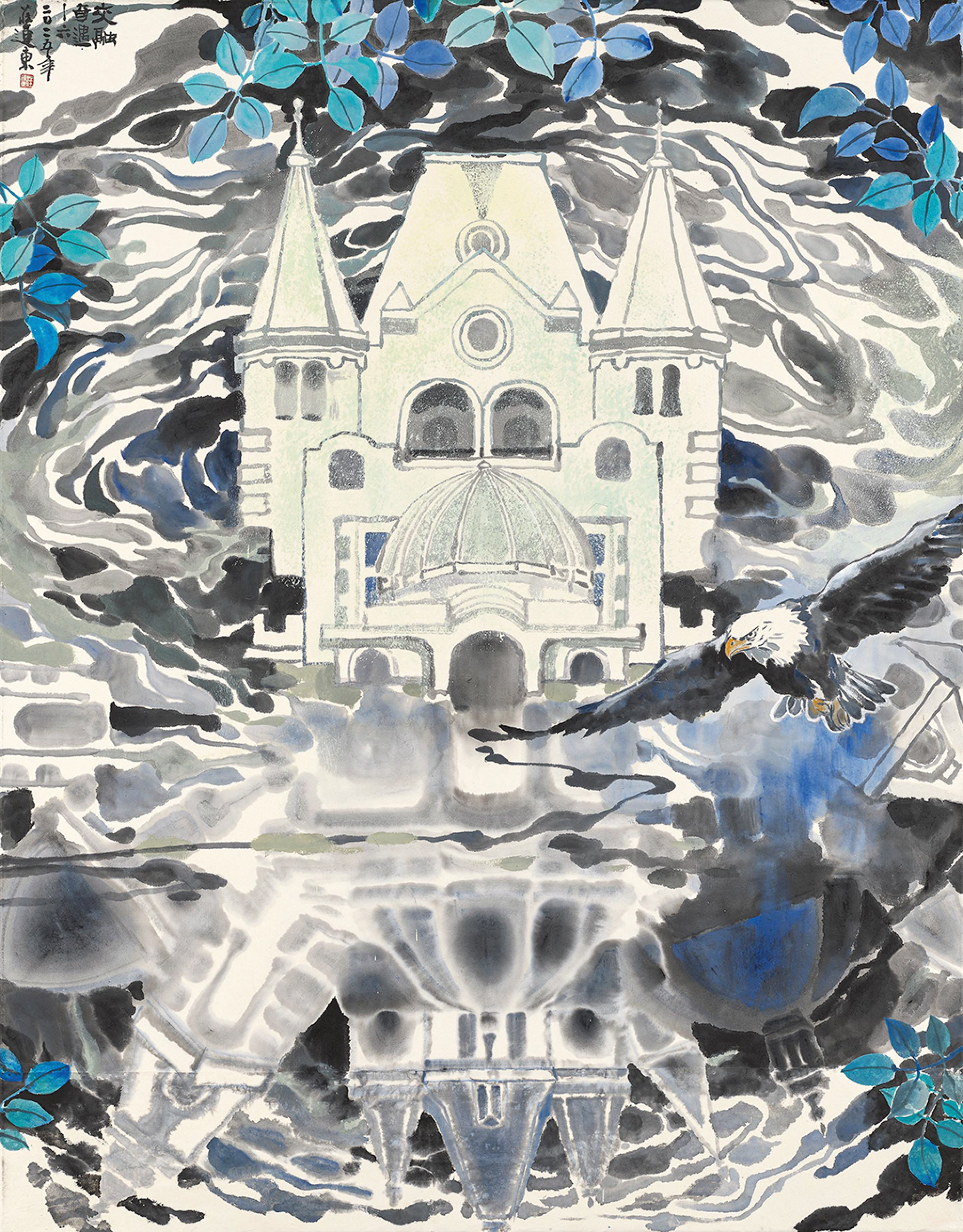
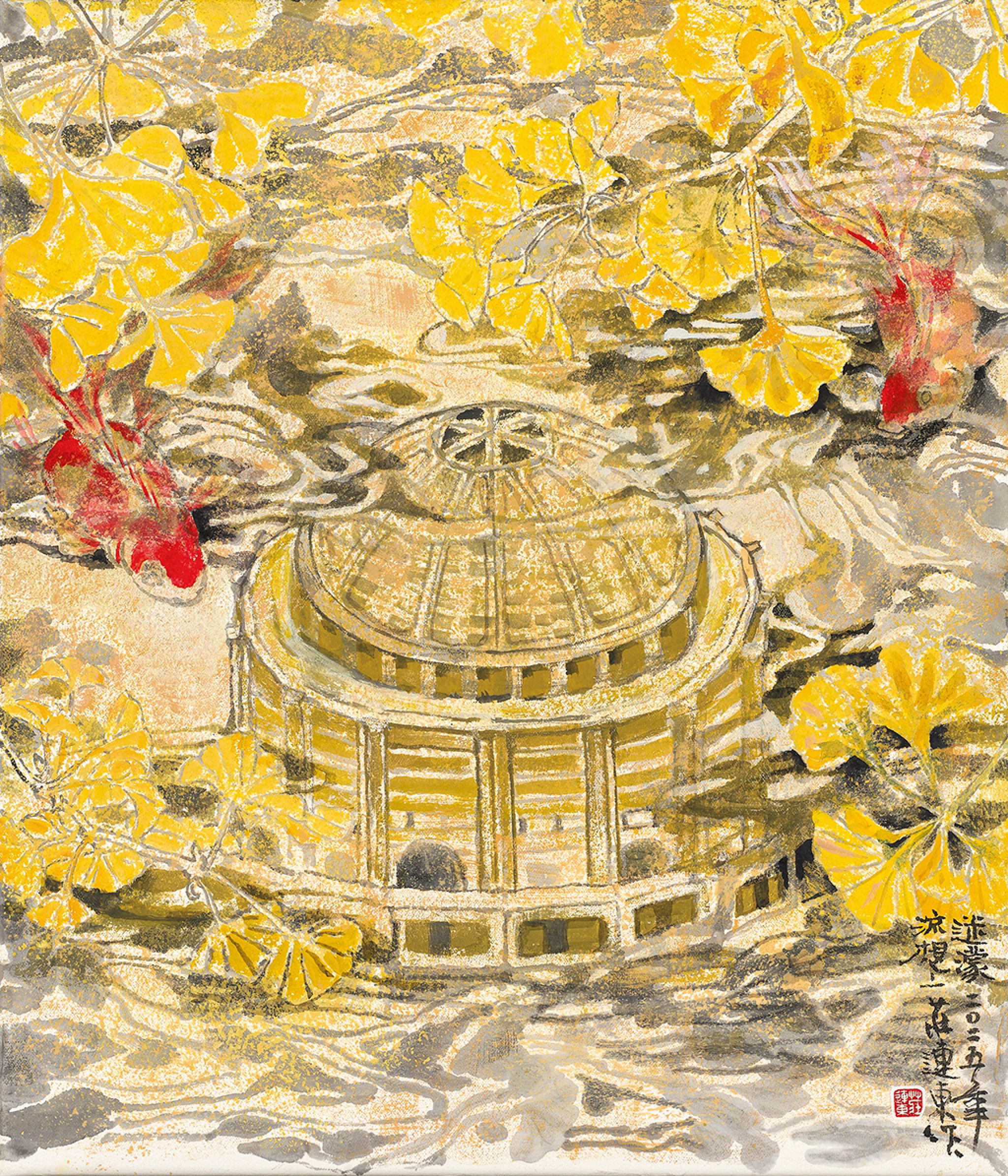
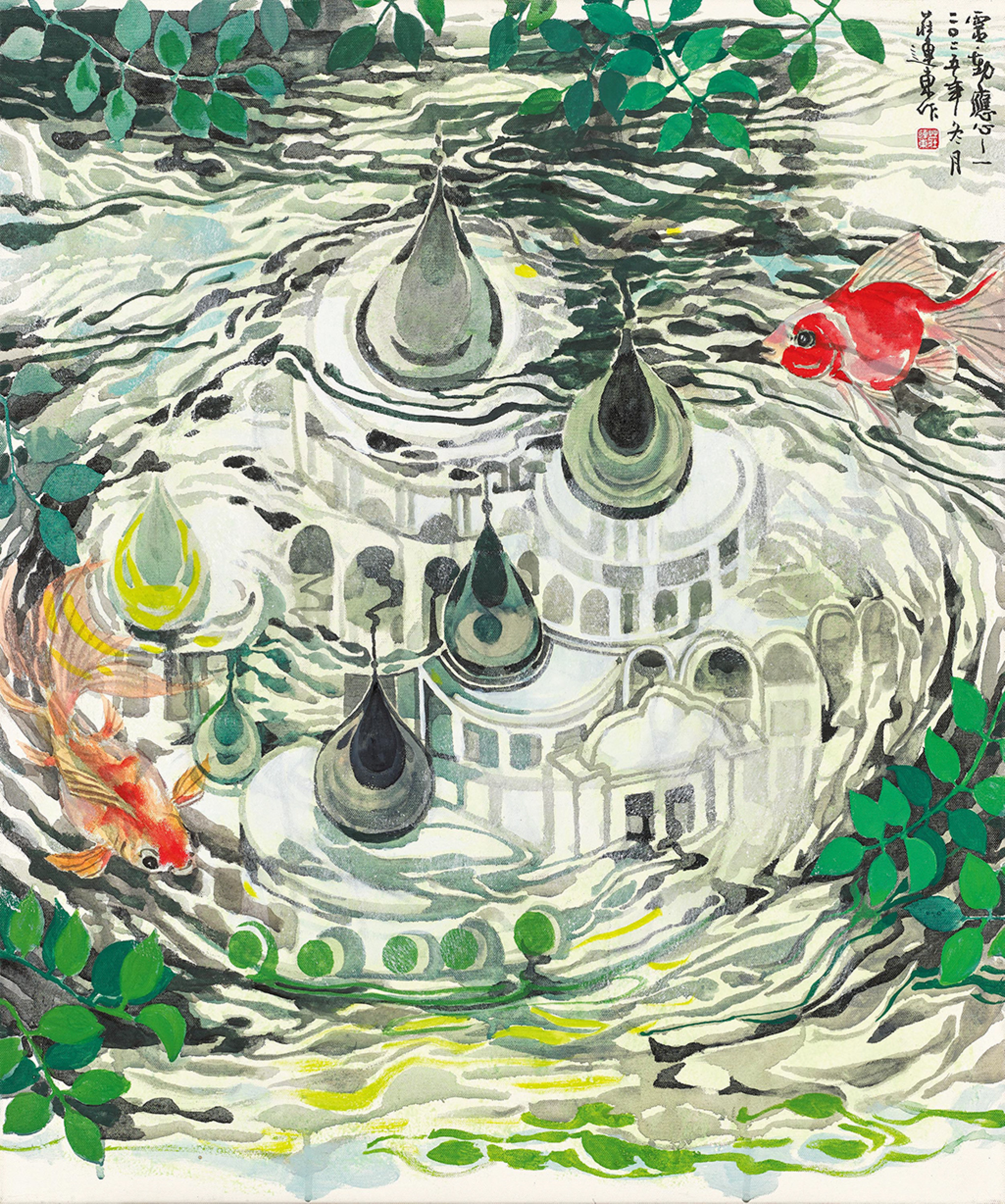
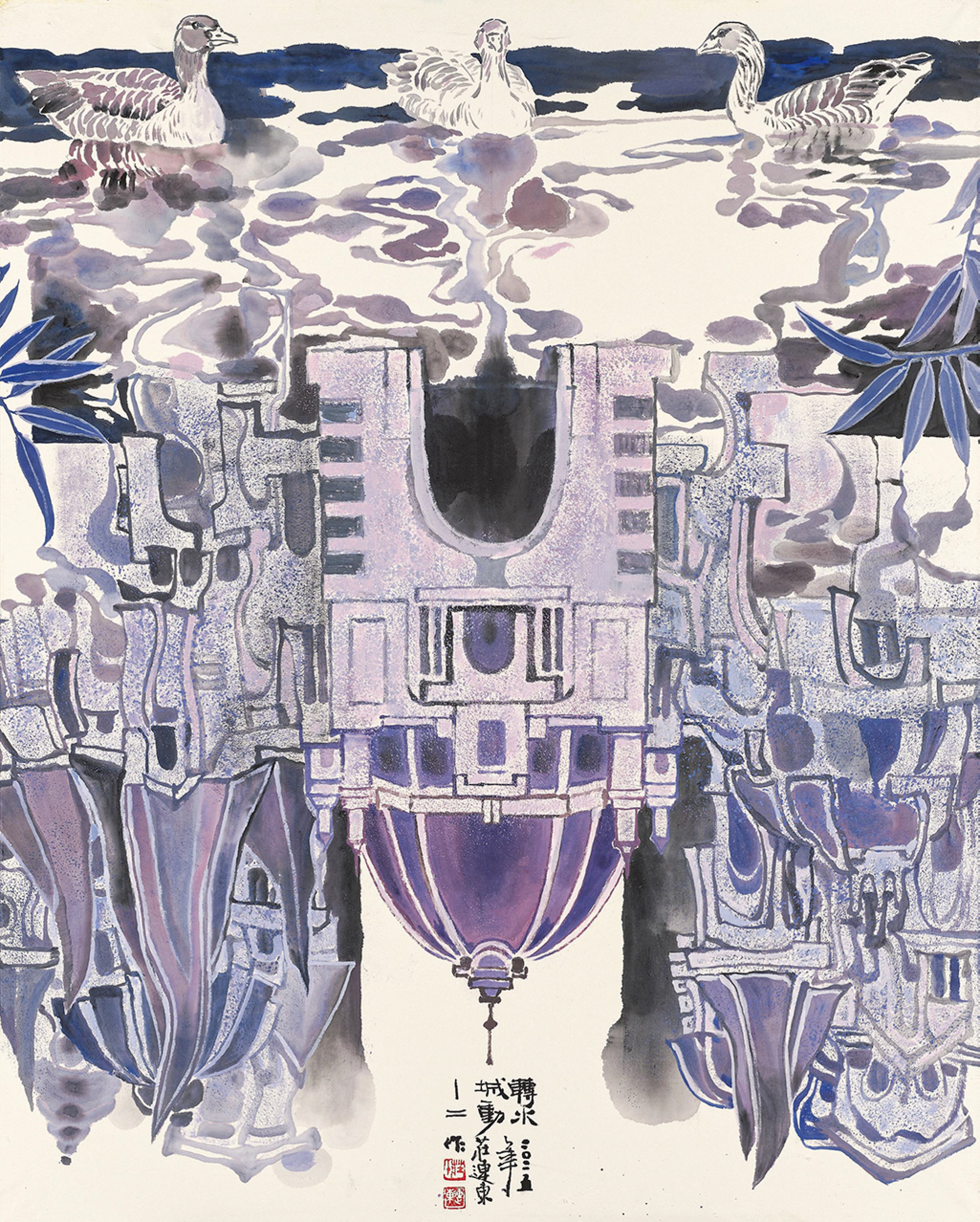
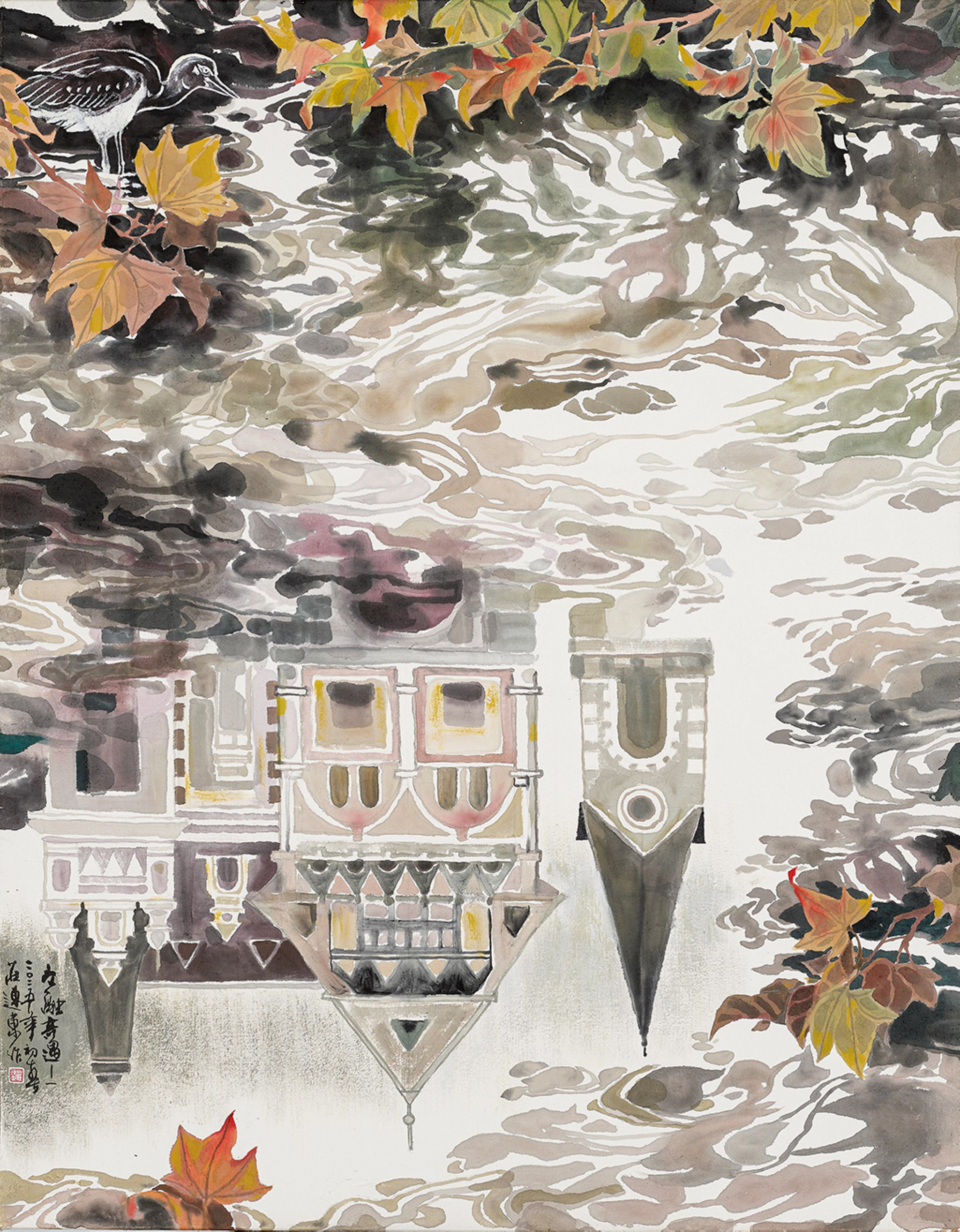
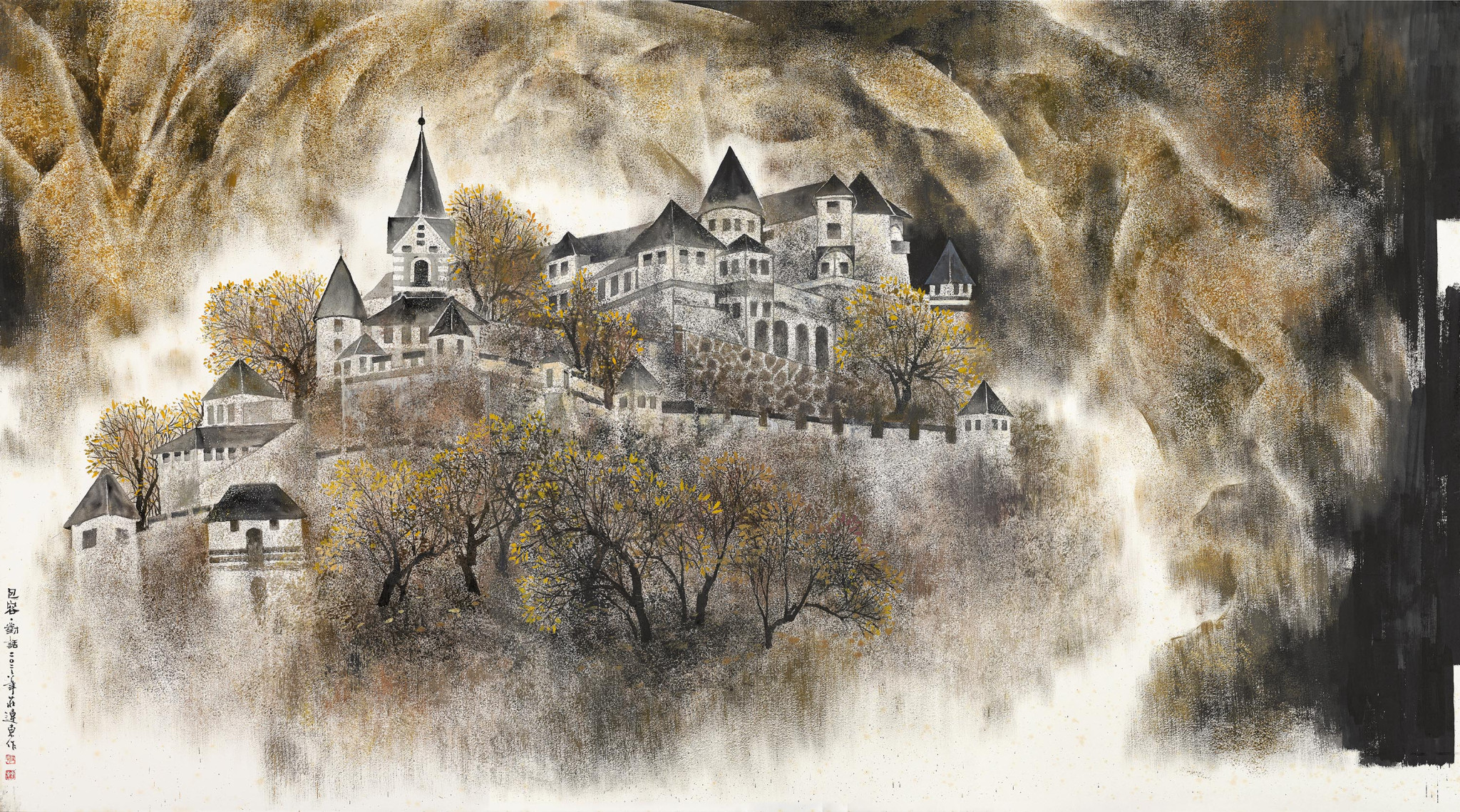
Crossing Boundaries · Mobility—Reflections of Chuang Lien-Tung’s European Journey
Chen Jian-Fa
As the pulse of time turns with the wheel, we have arrived at the close of 2025 in the twenty-first century. With advances in many aspects of contemporary life, globalization has become an increasingly convenient part of everyday existence. Yet amid the intensity and demands of working life, people have an especially strong need to seek ways of allowing both body and mind to rest. Among the many possibilities for relaxation, travel has become one of the most common responses.
Travel is a simple and immediate means of entering a different state of mind. It allows us to absorb and gradually process new information while preparing us for an encounter with a different version of ourselves. Travel is a way of exploring the world, but it is also a means through which we may develop a deeper understanding of the world we inhabit, of life, of everyday existence, and of ourselves.
A rewarding journey may relieve stress, promote physical and psychological well-being, broaden one’s horizons, strengthen confidence and independence, enrich life experience, and stimulate creativity. It allows us temporarily to step outside the constraints of everyday life; through encounters with new cultures, food, and landscapes, we learn to solve problems, rediscover ourselves, and create valuable memories, thereby enhancing our sense of well-being and quality of life.
Travel thus enables a person not only to explore the external world but also to discover the self within, undergoing multiple stages of refinement and transformation through “introspection.” When one encounters unfamiliar circumstances, observes and experiences what is regarded as ordinary in a different place, and compares it with the familiar environment in which one has grown up, the powerful impact and shock of these new sensory experiences repeatedly disrupt established frameworks, habits, and assumptions. Through further encounters and exchanges, reflection and introspection may generate deeper understanding, allowing greater opportunities for learning and an expanded field of vision.
British travel writer Freya Stark (1893–1993) once wrote: “A great traveler, as distinct from merely a good one, always carries something of introspection; while traveling thousands of miles outward, the traveler simultaneously deepens a new understanding of the self within.”
As new sensory experiences accumulate through travel and are subsequently reflected upon and internalized, they can lead to new discoveries about oneself. A profound journey therefore does more than carry us outward through physical space; it also encourages deep self-awareness, reflection, and inward transformation.
The Pictorial Concept of “Wandering”
For visual artists, experiencing through both the eye and the mind everything encountered during a journey can be an exhilarating and moving experience. Beginning from the inner world, the painter receives concrete scenes through the visual field and brings them into contact with subjective consciousness. These impressions are reorganized through emotional experience and become the basis of artistic creation.
After being internalized as inner images and artistic imagery, they are rendered through painting, recording accumulated impressions of natural beauty and exploring life itself. It is common for sincere brushwork to give every work a vivid sense of presence.
Traditional Chinese landscape painting has often emerged from the travel experiences of literati. Painters combine subjective emotion with objective natural scenery in pursuit of yijing, or artistic conception. Rather than merely depicting landscape, they incorporate personal thoughts, emotions, and ideals into the image, creating an artistic realm in which scene and feeling become inseparable.
This approach benefited greatly from the classical literati ideal of “reading ten thousand books and traveling ten thousand miles.” Ancient Chinese scholars often traveled through mountains and waters with humanistic or romantic sensibilities. When confronted with a mountain landscape, what appeared before their eyes was not simply vegetation and terrain, but an expansive realm of emotion and artistic conception beyond the visible scene. Such conception became one of the central pursuits of literature and art.
“Wandering” is therefore a distinctive aesthetic concept within Chinese landscape painting, emphasizing the viewer’s—or painter’s—spiritual participation and experience. It is not merely visual appreciation, but spiritual communication, emotional projection, and the free movement of imagination. It allows the viewer to experience a genuine sense of “wandering” within the painting and embodies a profound connection between humanity and nature.
In the West, meanwhile, the Grand Tour emerged in England around the mid-seventeenth century as a means of deepening the practice and understanding of landscape painting. Travelers journeyed through culturally rich regions such as Italy, Switzerland, and France, directly encountering classical ruins and natural wonders while studying and copying works by Renaissance and classical masters.
These experiences allowed artists to absorb the traditions and techniques of continental European art and, upon returning home, to incorporate inspirations gained during their travels into their own work, ultimately contributing to the development of new forms of British landscape painting.
Artists did not treat the Grand Tour simply as a record of travel. Instead, the natural scenery encountered along the journey was elevated into philosophical reflection. Through depictions of sublime landscapes, the artists transformed their awe before the power of nature into an opportunity to reconsider the relationship between nature and humankind.
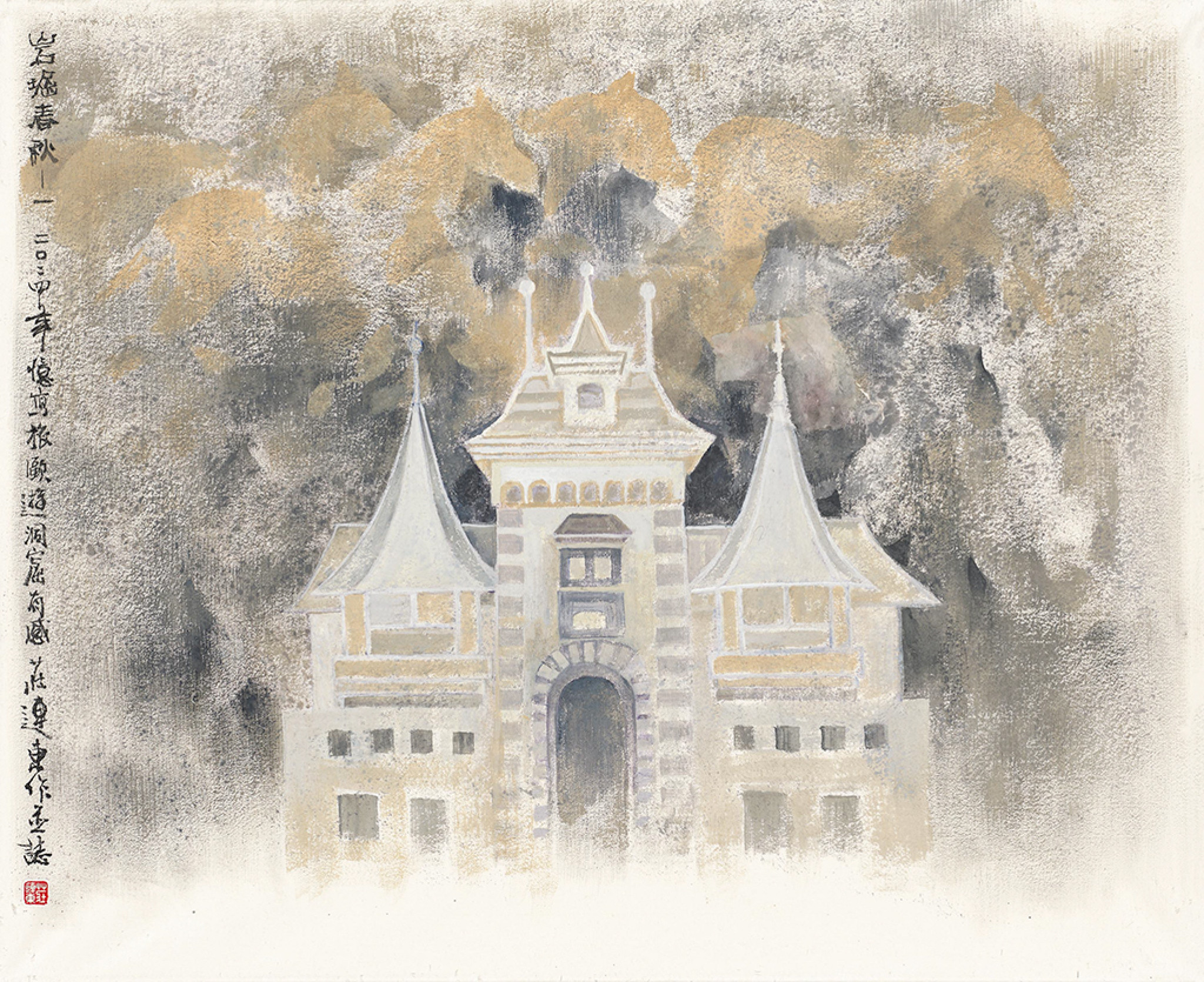
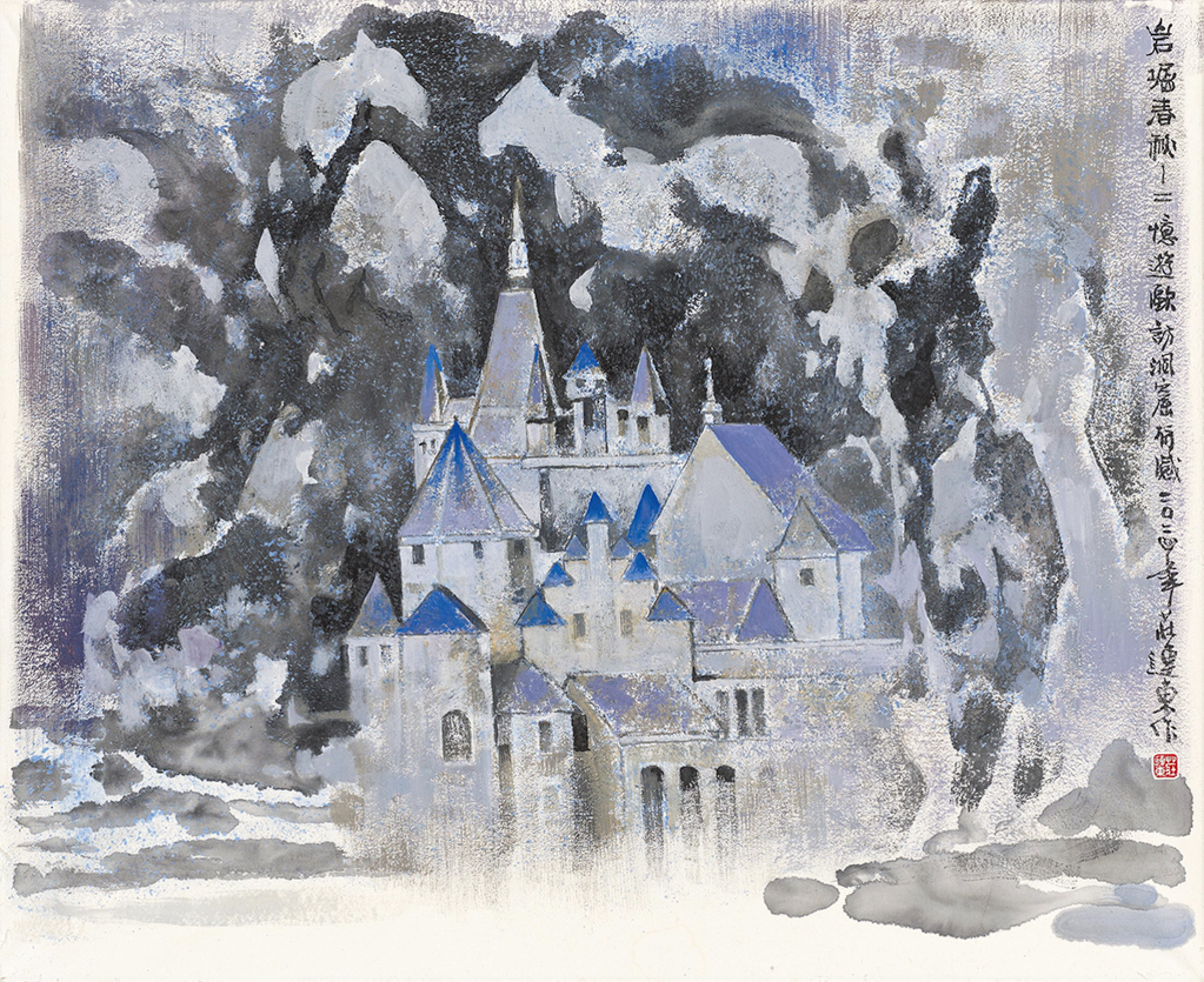
Today, with the convenience of modern transportation and air travel, Chuang Lien-Tung, Dean of the College of Arts at National Taiwan Normal University and a leading figure in both ink-painting education and artistic practice, has continued this mode of pictorial practice associated with the Grand Tour.
Beginning in 2023 and continuing intermittently over a period of three years, Chuang traveled extensively across Europe through a process of cross-regional movement, visiting historic urban sites, magnificent mountains and rivers, and places rich in cultural heritage. Immersed in a greater sense of openness and freedom from physical and psychological constraint, he was able to express his emotions freely.
Drawing upon years of accumulated artistic experience and his longstanding command of brushwork, ink, color, and imagery, Chuang reshaped and reconfigured modes of free expression, expressive brushwork, realism, abstraction, and design, producing a substantial body of works inspired by his European travels.
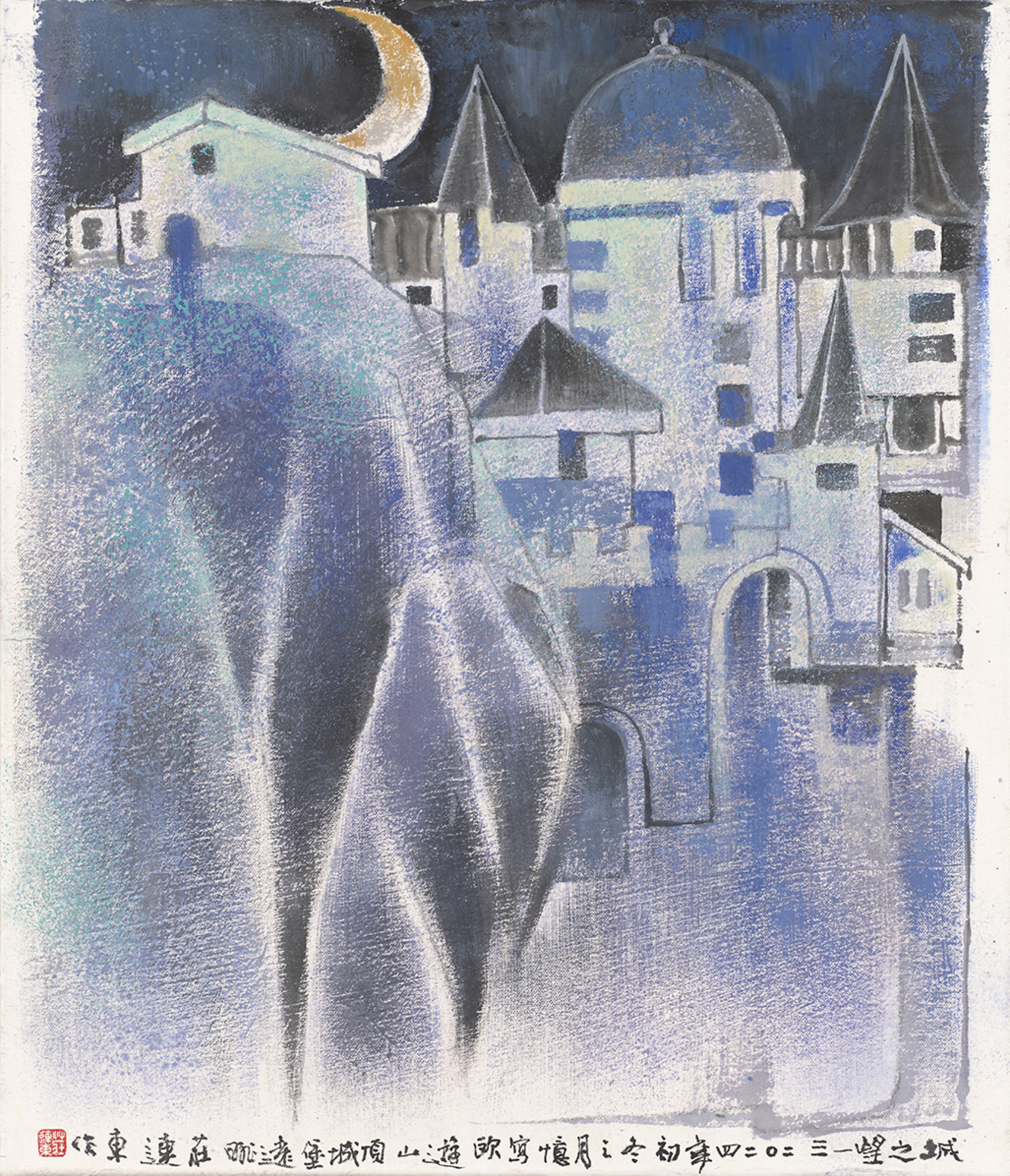
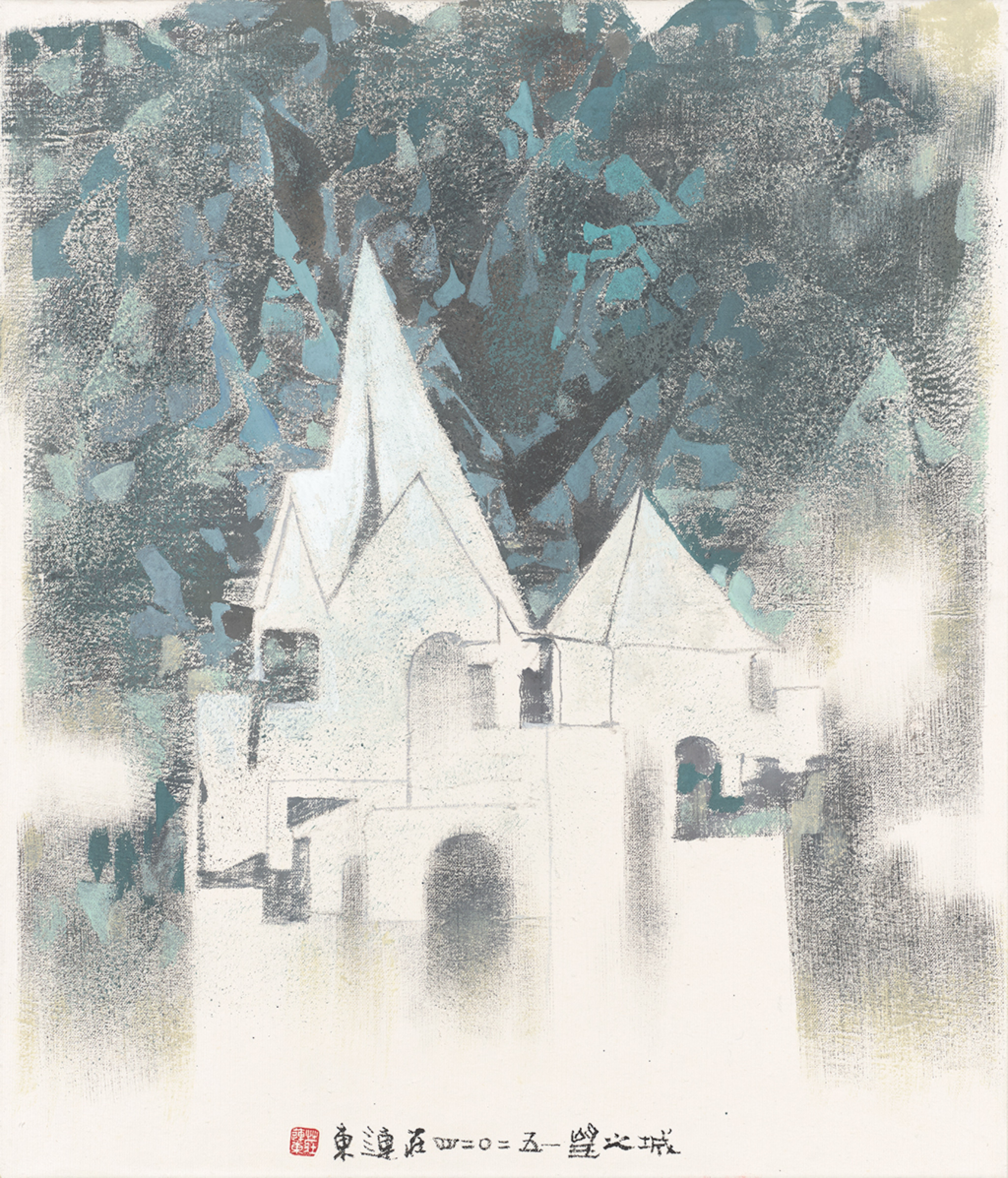
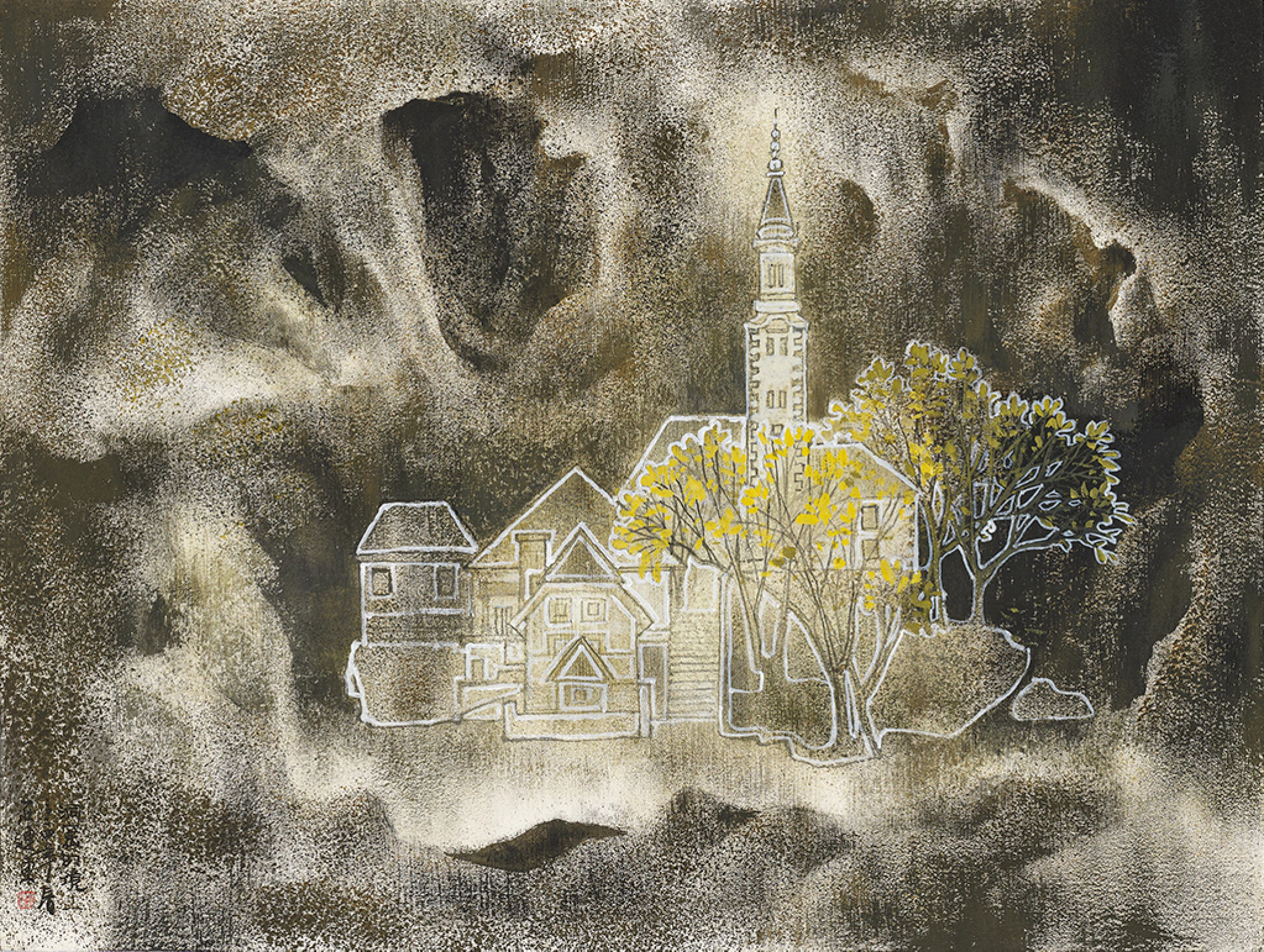
According to the artist, these works can be understood through several distinct perspectives. Their content is broadly divided into three aspects: Nature and Culture in Motion, Fantastical Worlds in Shop Windows, and Illusions of Interwoven Time and Space.
Each aspect is further divided into three themes:
Co-Construction of Natural and Cultural Imagery—Flux and Symbiosis
Co-Construction of Natural and Cultural Imagery—Embrace and Dialogue
Co-Construction of Natural and Cultural Imagery—Dissolution and Transfiguration
Imagining Layered Images in Shop Windows—Continuity and Innovation
Imagining Layered Images in Shop Windows—Reality and Inner Imagery
Imagining Layered Images in Shop Windows—Livelihood and Faith
New Resonances of a Submerged Ancient City—Encounter and Shared Dance
New Resonances of a Submerged Ancient City—Hazy and Ethereal
New Resonances of a Submerged Ancient City—Forms in Metamorphosis
Together, these constitute a total of sixty-six works.
The extraordinary variety and richness of this body of work once again demonstrate Chuang’s abundant creative energy. Having had the privilege of viewing these works in advance, I shall select one representative work from each of the three aspects and offer a brief personal interpretation of their artistic value and achievement.
Symbolism and Metaphor
Symbolism and Metaphor are among the techniques frequently employed in painting. Artists use images, signs, symbols, or textual elements within a composition to create suggestion and association, generating meanings that extend beyond what is directly visible in the image.
This “voice beyond the picture” represents one of the highest aesthetic aspirations of symbolism and metaphor in artistic creation. Painting contains a relationship between what is “revealed” and what is “concealed.” What is revealed is the concrete and visible form and materiality depicted by the artist; what remains concealed beyond the surface of the painting consists of the abstract thoughts, emotions, and temperament that invite further exploration.
Through these means, artists develop a visual language capable of conveying deeper meanings, emotions, and concepts. Abstract ideas may be given concrete form, or seemingly disparate things may be juxtaposed to create multiple possibilities of interpretation. The work can thereby move beyond surface appearances to engage with subconscious and cultural contexts, enabling painting not merely to represent reality but to investigate deeper realities, emotions, and spiritual worlds. In this way, the scope of painting extends beyond figurative description into broader cultural and psychological territories.
Nature and Culture in Motion
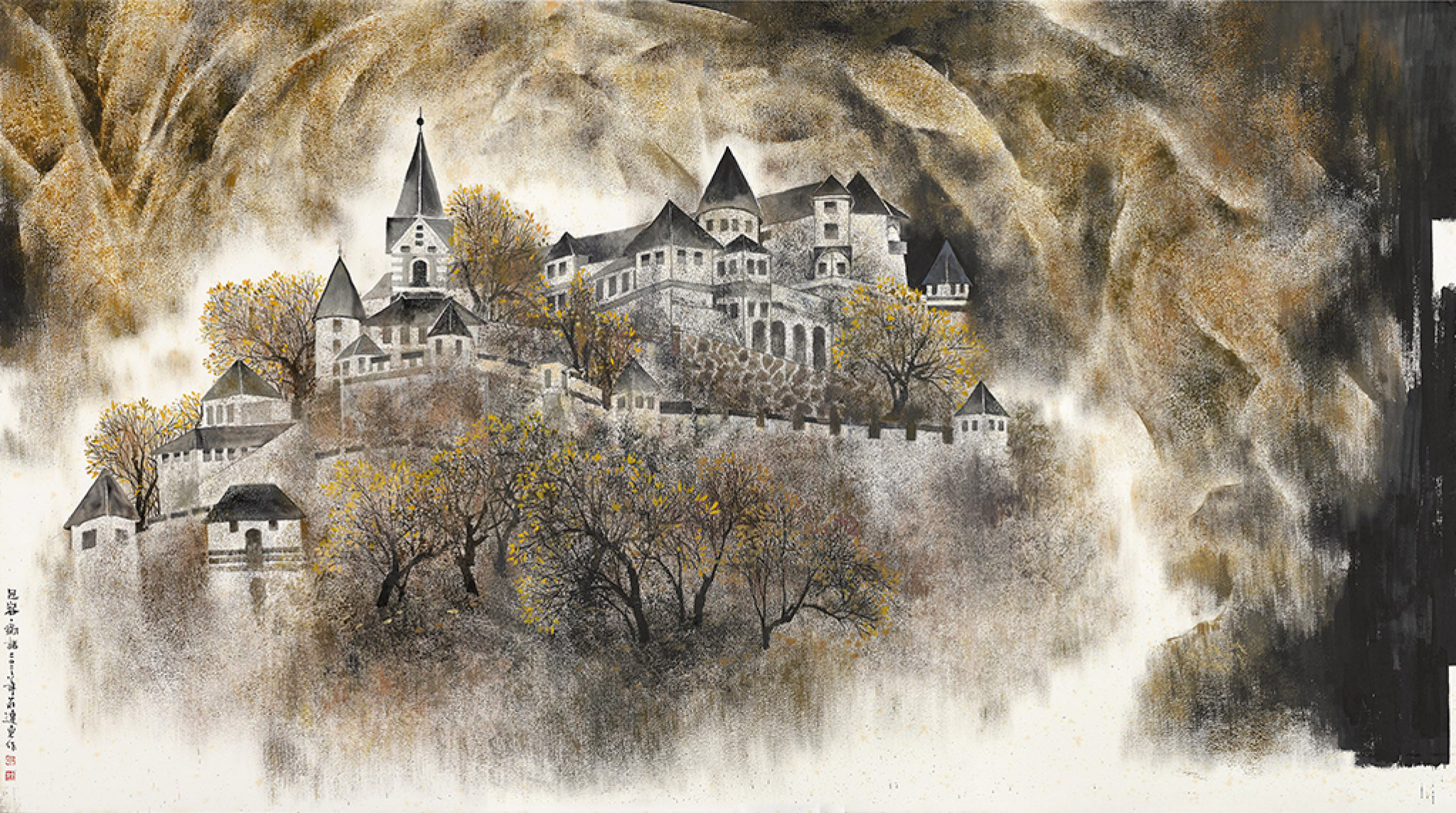
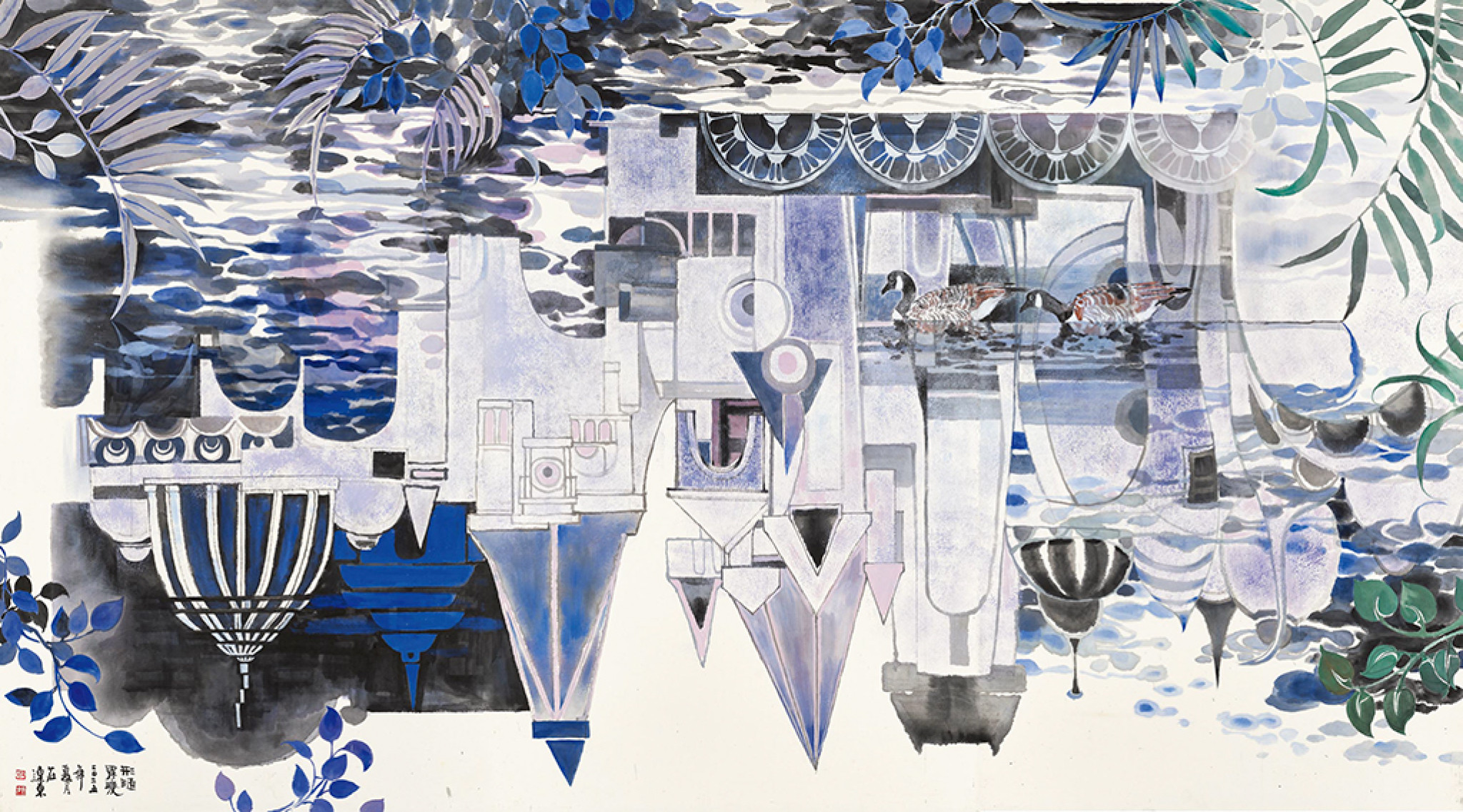
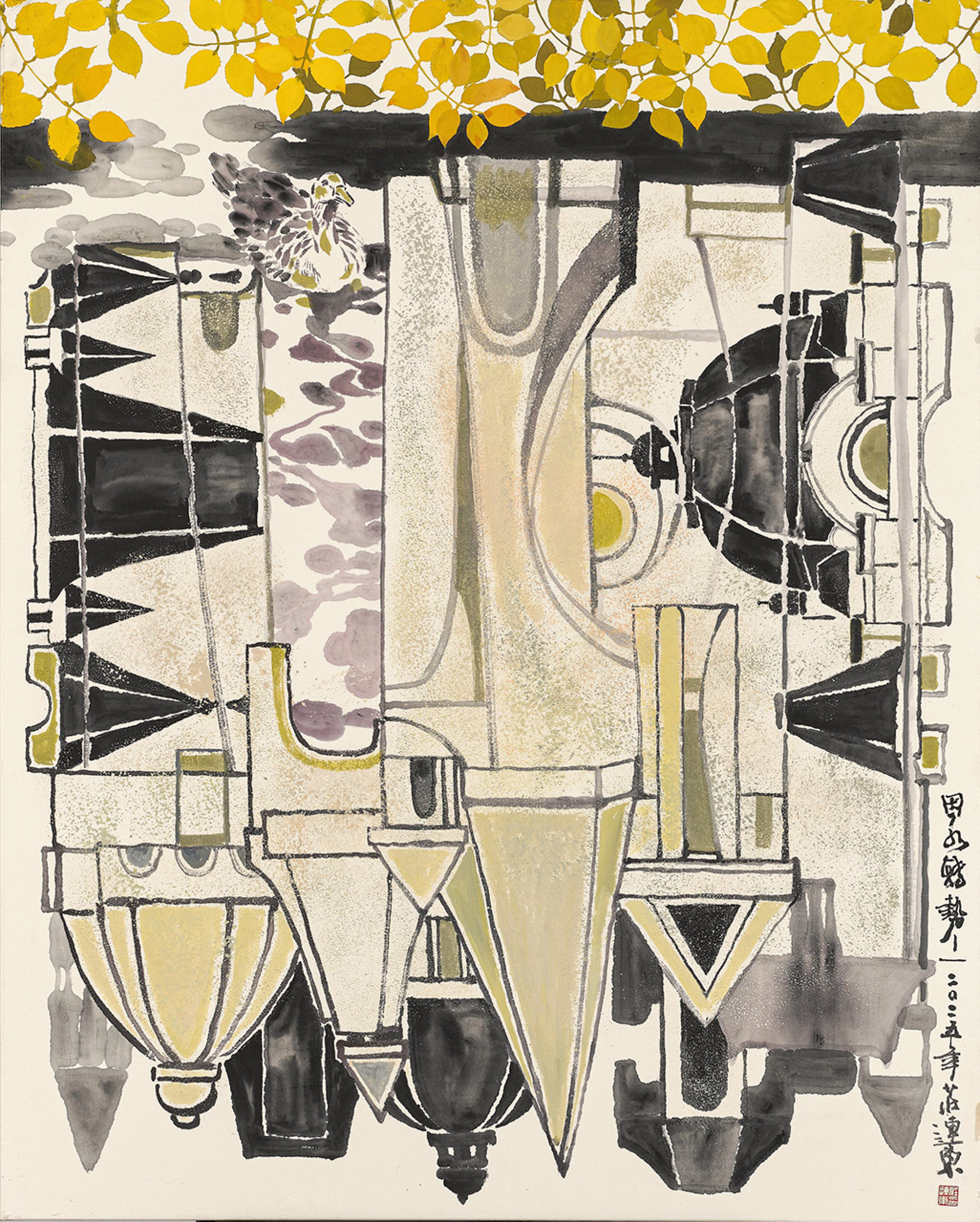
Figure 1: Chuang Lien-Tung, Flux · Symbiosis, 2025, painting, dabbing, color, ink, GESSO on paper, 150 × 270 cm
Created through the visual experience of traveling in Europe, this mixed-media ink work establishes two strong sets of visual contrasts: “mountain and city,” “reality and reflection,” and “icy blue and golden light.” Travel impressions, memories of civilization, and cultural reflection are transformed into a spatial narrative that is both poetic and philosophical.
The horizontal composition unfolds with imposing European mountain scenery and an ancient city across the upper portion, dominated by cool tones. Below it appears an inverted group of golden buildings, resembling a reflection upon a lake but also suggesting an extension of civilization onto another plane—one filled with prosperity, energy, and even the luminous intensity of urbanization.
The upper and lower halves form a mirror-like structure, yet their details are not entirely symmetrical, making it apparent that this is not simply a reflection but a juxtaposition of two cultures and two states of mind.
The mountains are constructed through continuous brushwork, their densely layered textures creating a profound sense of spatial depth. The ancient city is rendered with finer lines; its rooftops and spires remain clearly discernible, evoking the silhouettes of Europe’s religious and historical architecture.
The golden buildings in the lower portion appear familiar yet have been treated abstractly. Their inverted orientation gives the entire composition a sense of temporal sedimentation: civilization disappears into history only to resurface from another direction, echoing the notion of “flux” within the title.
Although the surface of the painting appears to depict scenery from another land, it is not a straightforward sketch from life. Rather, it is a recombination of travel memories and inner landscapes. Mist, points of light, floating areas of brightness, and dissolving traces of ink transform actual scenes into landscapes imbued with memory, spirituality, and symbolism.
The mountain city constitutes the traveler’s initial visual impression: cool colors, fragmented textures, and dense arrangements of architecture recall European towns nestled between mountains and lakes. The reflected city, meanwhile, suggests a deeper understanding of the radiance of civilization. Golden points and lines resemble not only urban lights but also flows of energy within a network of civilization.
Through the opposition of upper and lower sections, the work allows two impressions from the European journey—“nature and culture” and “tranquility and urban splendor”—to coexist. The viewer thus encounters an intertextual relationship between cultures.
This approach is characteristic of an extension of Eastern ink-painting thought: its aim is not to reproduce reality but to reconstruct imagery.
The work employs multiple techniques and materials, including painting, dabbing, color, ink, and GESSO, producing a complex visual effect that at times approaches the texture of printmaking.
In the mountains, one can observe ink washes, texturing strokes, rubbing techniques, and broken-ink effects. In particular, the mountain surfaces reveal passages where dryness exists within wetness and concentrated ink emerges from dry textures, recalling the traditional vocabulary of cun, or texture strokes, in Chinese landscape painting.
Chuang, however, employs these techniques over broader areas and in more abstract ways, allowing them to move beyond the established conventions of traditional Chinese landscape painting.
The addition of GESSO gives the surface greater textural depth. Irregular patterns created on the paper cause pigment and ink to accumulate, fracture, and disperse, making the material particularly effective for conveying the surfaces of ice, rock, and mist.
This combination of Eastern and Western materials embodies the concept of “symbiosis”: a fusion between technique and culture.
The interaction among blue, green, and gray in the mountains is not achieved through simple flat application. Instead, repeated dabbing, staining, spraying, and layering generate visual effects resembling ice crystals, frosted surfaces, or light penetrating through atmospheric space.
The gold and black of the lower section form a powerful contrast, suggesting flashes of civilization emerging from darkness while also resembling fragmented lights scattered across a reflection disturbed by wind.
The most striking feature of the entire work is its chromatic opposition—the visual pull between icy blue and a golden palette. Blue and green represent nature, lakes, cold climates, tranquility, and the slow passage of time; gold and black signify the city, night scenes, the development of civilization, and energy. Together they symbolize the contrast between the “tranquility of nature” and the “oppressive splendor of urban life” encountered during travel.
The work presents the polarity between nature and civilization while simultaneously suggesting the coexistence of Eastern and Western cultures. Its mirrored upper-and-lower structure transforms the painting into a reflection upon culture, ecology, and one’s own position in the world: nature endures, whereas the splendor of civilization inevitably carries within it the rhythm of disappearance. The two remain interdependent, together constructing the traveler’s inner world.
Fantastical Worlds in Shop Windows
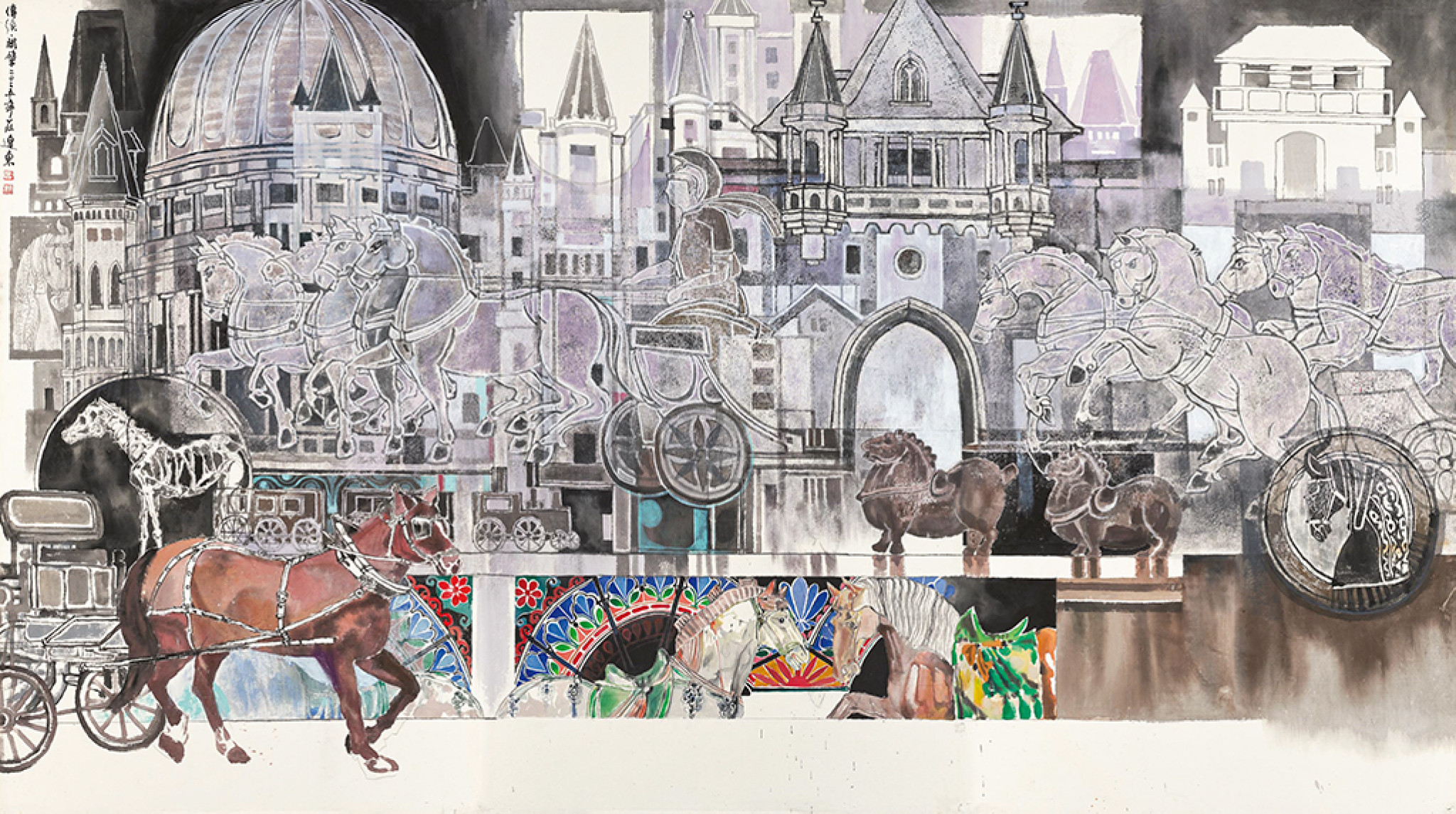
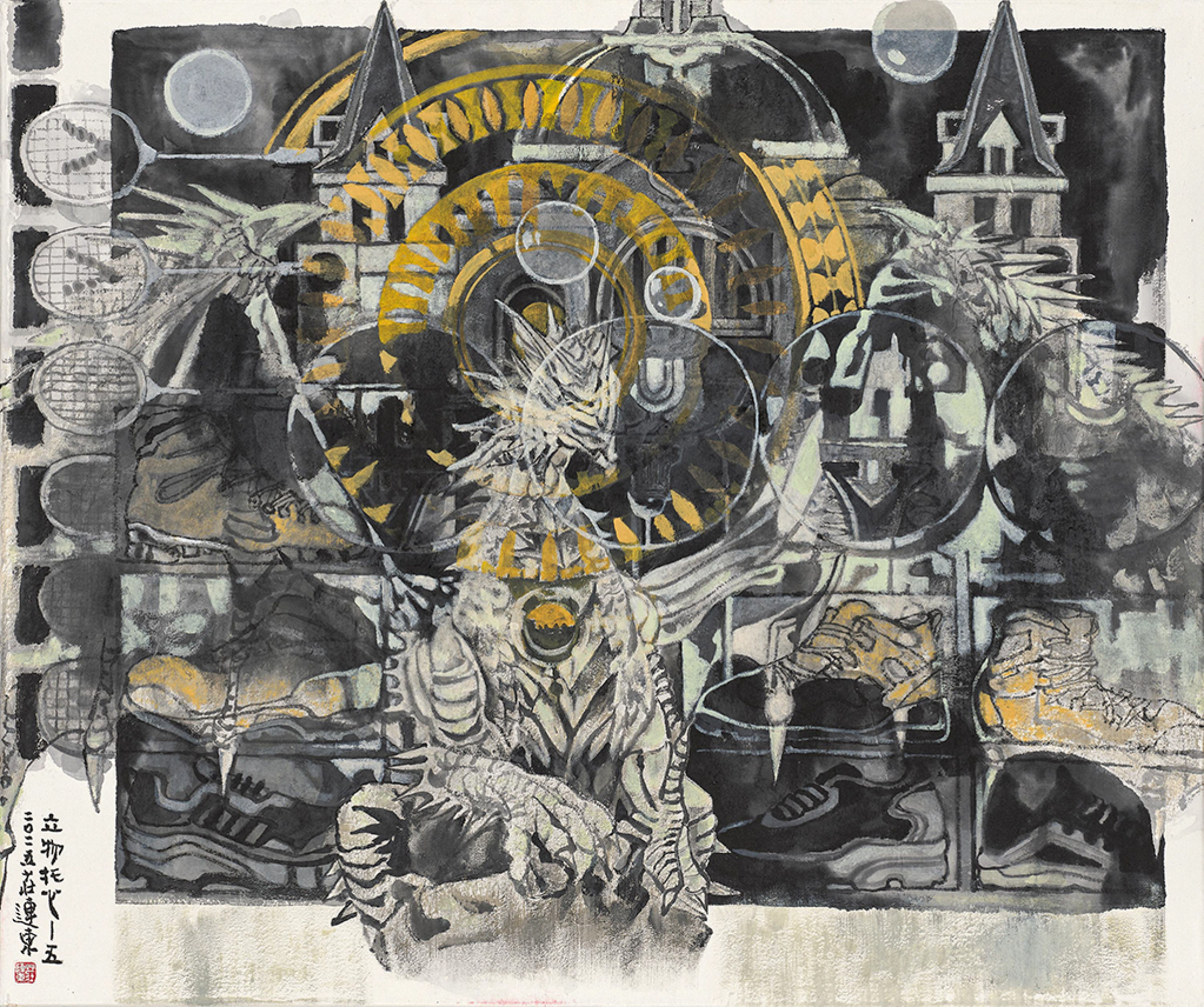
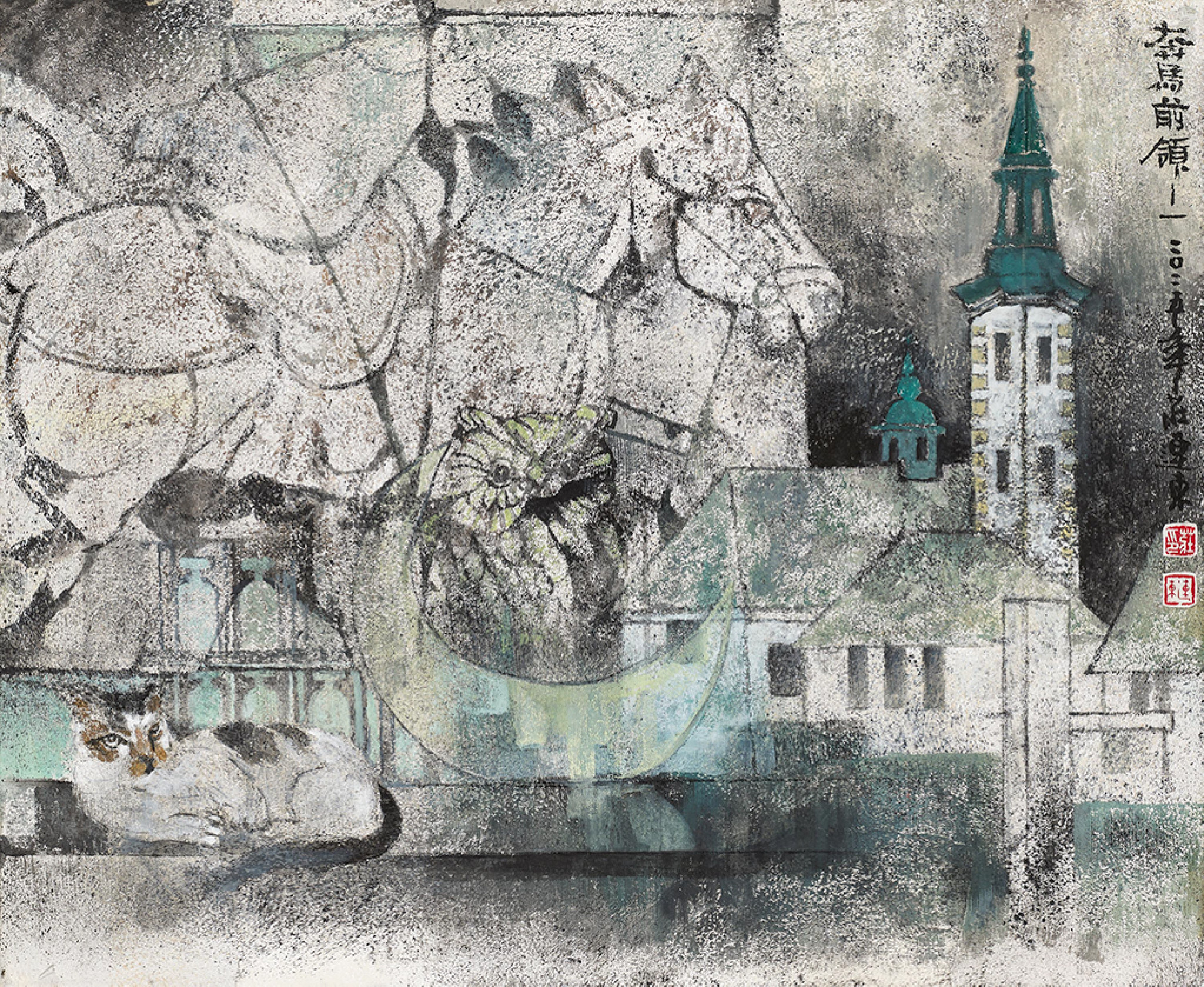
Figure 2: Chuang Lien-Tung, Livelihood · Faith, 2025, painting, dabbing, color, ink, GESSO on paper, 150 × 270 cm
Taking “livelihood” and “faith” as its central themes, this work explores how human beings move repeatedly between the realities of everyday life, the necessities of survival, and spiritual dependence—between history and the contemporary world, rationality and myth.
Several groups of European architectural images can be identified within the composition, including domed churches, arcades, classical façades, and urban street scenes. These symbolize the central structures of religion, power, and urban development within European history.
The architecture does not represent a single actual location. Rather, it is an accumulation of impressions from multiple cities, resembling fragments of different moments and spaces encountered during travel and subsequently reconstructed within memory.
Among these architectural forms, the artist introduces several symbolic figures and animals: a winged dragon, an owl, a carriage, and human figures.
The dragon carries strong mythological associations. It refers both to protection and authority within Western legend while also suggesting humanity’s awe before unknown forces. The owl symbolizes wisdom and the nocturnal observer, standing at one side of the image as though calmly watching the operations of the human world.
The carriage and human figures, by contrast, belong to everyday life, suggesting transportation, labor, mobility, and the practical realities of “making a living.”
By placing mythological creatures alongside everyday instruments, the composition creates a narrative suspended between reality and allegory. It suggests that even within highly rationalized and institutionalized societies, human beings continue to rely upon symbols and faith to sustain a sense of existential meaning.
The work adopts the format of a horizontal handscroll, producing a visual rhythm reminiscent of historical murals or narrative painting. There is no single clearly defined viewpoint. Instead, foreground, middle ground, and background are layered so that viewers gradually read the imagery as their gaze moves across the work.
Architectural forms appear in multiple parallel layers. Some are rendered in line drawing, while others are strengthened through ink or color ink, producing a simultaneous sense of spatial compression and extension.
The overall palette consists primarily of low-saturation gray, ink black, cool green, and pale brown, creating an atmosphere that is somewhat somber and contemplative. Cool green is concentrated within the form of the dragon, allowing it to stand out without appearing disconnected from the rest of the composition. This suggests the power of faith lying beneath the deeper structures of civilization.
Small areas of warmer color appear in human figures and certain architectural details, implying the warmth of human activity and creating a contrast with the predominantly cool environment.
The work extensively employs ink washes, layering, and negative space in combination with the textures produced by GESSO, causing the ink to fracture, permeate, and accumulate across the paper in multiple ways. Architectural elements are largely rendered with line drawing and light ink, conveying structural rationality, while the dragon and background shadows are treated with denser layers of ink, creating a sense of symbolic weight.
Livelihood · Faith is not a critique of two opposing concepts; rather, it presents a condition in which they coexist.
The carriage, city, and human figures symbolize the systems of labor and order established by humanity for survival, while the dragon, owl, and religious architecture symbolize the human pursuit of spiritual sustenance, meaning, and order.
Their interweaving within a single pictorial field demonstrates that even in highly modernized societies, faith remains deeply embedded within the structures of everyday life.
The work not only responds to the artist’s experience of traveling in another land, but also reflects a universal human condition, allowing ink painting to become an open visual language capable of addressing questions of civilization and contemporary thought.
Illusions of Interwoven Time and Space
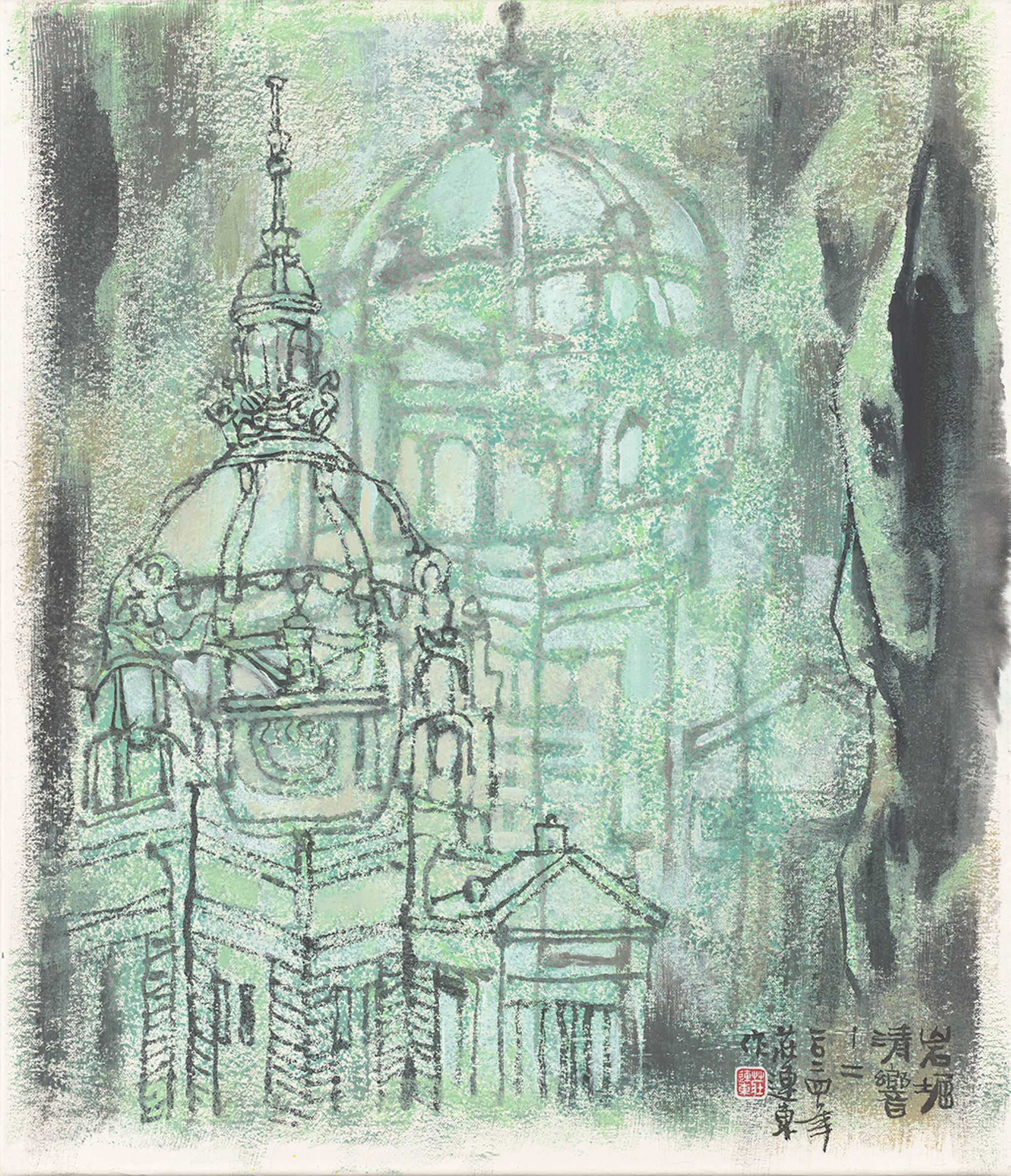
Figure 3: Chuang Lien-Tung, Illusions of Interwoven Time and Space, 2025, painting, dabbing, color, ink, GESSO on paper, 180 × 180 cm
At the heart of this work are the ideas of “interwoven time and space,” “the reconstruction of memory,” and “the refraction of history and culture.” Through architecture, animals, decorative motifs, and spatial displacement, the composition presents a visual realm suspended between actual travel, the inner world of imagery, and fragments of time.
At the center stands a large domed structure based on the vocabulary of Byzantine architecture, reminiscent of Hagia Sophia and functioning as a symbol of the center of civilization.
The dome, arches, columns, and symmetrical architectural language transform structures retained in travel memory into abstract symbols of civilization and history. Around them, fragments of towers, rooftops, and spires appear inverted, sliced apart, or suspended in space, resembling pieces of memory rearranged by time.
These fragments do not obey conventional perspective. Instead, they coexist within an inner pictorial space, creating a visual language resembling a collage of civilization.
Fish and birds appearing on the left and lower parts of the work symbolize water and sky, meditation and migration. Simplified in ink lines, they inject a sense of life into the otherwise tightly structured architectural composition.
The work employs nonlinear space and avoids a single viewpoint, instead using fragmented time and space as its structural foundation.
The architectural forms that turn upside down across the upper and lower portions are not reflections but alternative versions existing within parallel temporal-spatial dimensions. Architecture is cut apart, dismantled, and reconstructed, symbolizing the uncertainty of memory.
The plant motifs above resemble European carved stone window frames, while the vertically inscribed text along the left recalls the writing tradition of Eastern ink art. Together these symbols construct a field in which cultural boundaries overlap, allowing classical and contemporary, Eastern and Western elements to coexist.
Although the work incorporates color ink and GESSO, its principal visual emphasis remains upon gradations of black, white, and gray. The layers of ink give the painting the material quality of accumulated time.
These tonal levels include:
Dark ink: emphasizing openings and shadows and symbolizing the “depths of civilization.”
Mid-tone ink: defining the gray surfaces of architectural walls while retaining their form and volume.
Light ink: creating broad areas of haze that lend the image a floating and dreamlike quality.
Smoke-like traces of ink and areas of negative space turn the image into something resembling the light and shadow of memory, producing a temporal-spatial illusion in which forms seem to appear and disappear.
The title Illusions of Interwoven Time and Space identifies the spiritual core of the work. What the artist presents is not a single scene but an inner world formed through the overlapping of civilization, memory, and travel.
What is represented is not “Europe” itself, but rather “an inner vision of looking at Europe.”
Through displaced architecture, animal symbolism, layers of ink, and the coexistence of Eastern and Western cultural signs, Illusions of Interwoven Time and Space reveals the traveler’s inner temporality and the overlapping shadows of civilization.
The work is at once a journey and an inner image; it is both reality and illusion. In this way, it creates a new contemporary ink-painting context that crosses cultures, time, and space.
Conclusion
When discussing the differences between Western landscape painting and Chinese shanshui painting, art historian Shih Shou-chien (1951–) once observed:
“Landscape in Western landscape painting refers to the natural scenery perceived by the human eye and exists under specific conditions of space and time, including such variables as light, climate, and season. By contrast, Chinese shanshui painting transforms landscape beyond such specific references into an idealized vision of nature, one that becomes associated with the ideal imagery represented by the Peach Blossom Spring.”
In fact, neither Western landscape painting nor Chinese shanshui painting should be understood merely as an imitation of nature. Both, on some level, reconstruct what we call “nature.”
Eastern shanshui painting, however, more closely resembles an inner landscape approaching the ideal image of the Peach Blossom Spring. It represents an ideal and a spiritual realm—a place of refuge in which the artist may withdraw from ordinary reality and toward which the heart may aspire and return.
The works Chuang Lien-Tung has created after returning from his European travels function in a similar way. Through symbolism and metaphor, they begin from a human-centered position without attempting to record specific human figures or activities in a documentary manner.
Rather, they emerge through an integration of the external world, psychological reflection, and inner sensibility. These elements are connected with the artist’s own consciousness, rewoven, and ultimately presented to the public through his distinctive techniques and creative methods.
The works display rigorous composition and atmospheric construction while simultaneously embodying Chuang’s distinctive interpretive style and sensibility toward the subjects he encounters.
Chuang’s artistic practice has long been distinguished by its grounding in rational and theoretical analysis, which provides a foundation for his sustained experimentation and exploration of ink painting.
He is particularly willing to experiment with new materials and techniques in order to move beyond the pre-existing constraints and frameworks traditionally associated with ink painting, thereby establishing an innovative and distinctive artistic value of his own. Such a capacity is among the essential qualities required of representative artists working within any historical period.
Over the years, Chuang has undertaken numerous explorations of subject matter, content, and modes of artistic expression within ink painting. Each encounter with his work is capable of inspiring surprise, emotional resonance, and new insight.
He is an extraordinarily versatile ink artist, inheriting a rich body of knowledge and technique from traditional ink painting while also possessing a sophisticated understanding of the aesthetics, philosophical ideas, and formal concepts of modern and contemporary Western art.
This can be readily observed throughout his oeuvre. He retains a mastery of classical brush-and-ink techniques while simultaneously incorporating numerous modern and contemporary artistic forms and concepts. In this sense, he may be regarded as an accomplished artist positioned at a crucial point of connection between artistic traditions and the contemporary era.
As discussed above, the works produced following Chuang’s European travels reveal a clear cultural and creative lineage while also engaging in conceptual inquiry through the artist’s individual modes of expression.
They will undoubtedly offer viewers yet another renewed visual and spiritual experience—one well worth anticipating.